Tag Archives: Games

friday_011

F011

I’ve always said: celebrity deaths come in threes. Then again, so do the deaths of my treasured possessions, it seems.

The last week or two have mainly been spent trying to mend, or replace, pieces of electrical equipment that seem to have decided push up the daisies: first, my cellphone; then, bits of my car; and finally, my TV. I’m beginning to think that I have some sort of curse: a sort of Midas Touch that causes electrical equipment to expire by merely being in the same geographical location as me. Perhaps I’m made of magick.

[it’s worth pointing out at this juncture that my digital camera has also developed some sort of fault that I’ve not quite been able to get to the root of; which does mean that the ‘bad things come in threes’ rule has been shattered and that I may have actually broken the universe. If a gaping maw of inter-dimensional cataclysm has opened up near you, then I’m desperately sorry.]

While sorting out a new cellphone and repairs to Big Suze have been no great cause for festivity, this recent state of affairs has forced me to pick up a new TV to replace my old, enormous CRT monolith and finally join the world of High-Definition. I’m not usually one to crow about graphical fidelity or anything, but my, is it purdy. I’ve most recently been playing a lot of Need for Speed: Most Wanted (the PS3 one, although I still sort of maintain that the original one is better, if less pretty) and my goodness does it look good. Obviously, I’m a massive automotive nut and am “well into” motor racing and stuff so am already slightly aroused by the sight of attractive pieces of metal and carbon fibre moving at high speed, but NFS:MW it a delight to look at; with its lovely reflections and lens flare and sunset filtration and gorgeously cinematic, pre-race short films.

Oddly enough for an avid watcher of motor racing and things going fast and things, racing games have never, really, found a particularly special place in my heart: yet, I can’t really explain why. Somehow, the accurate racing simulations (Gran Turismo, Forza, Project Gotham Racing, etc.) have always felt too methodical and not enough like a game to me; requiring expenditure of countless hours in the digital garage, tweaking every last nut and bolt in order to shave hundredths-of-a-second off a lap time. Funnily enough, I adore stat-based /RPG elements in a story-based game with character development and adventurin’, but grow restlessly yawnsome when I’m forced to stare at too many stats and upgrades in other genres (strategy, simulation, etc.). My main motivation, when playing a video game, is still to have fun; whereas simulation games (be them racing, farming or goat simulators), for me, have always placed too many barriers in front of the important business of fun.

Need for Speed has always felt a little different, though; blending some aspects of the engine-tweaking upgradability with the sheer, foot-to-the-floor velocity of OutRun. The movement of Criterion Games developing many of the latter Need for Speeds (Hot Pursuit, Most Wanted and The Rivals) has meant that they’ve absorbed a lot of the features that Criterion previously introduced to Burnout; slow-mo, metal-bending crashes and friendship-ending revenge takedowns. Weirdly, then, NFS:MW feels like a public safety video highlighting the perils of street racing; with time slowing to render every smash, shunt and shimmer in a haunting ballet of wrangled metal. It’s been a genuine delight to take such a perverse amount of pleasure at watching digital cars crashing/breaking in high-definition, perhaps acting as some sort of poetic justice countering everything else that’s doing its best to self-destruct in my life.

In honesty, I’ve played a lot of Need for Speed: Most Wanted. I discovered some time ago that racing games were one of those rare instances where I can truly lose myself and forget, utterly about the outside world. Perhaps it’s something about focussing purely on whether the next apex is and how you can tread the very fine line between optimised speed and loss of control that stops the rest of my brain (the bit that constantly worries, questions and fears) from gaining any sort of traction [pun intended]. It’s not necessarily that I have any racing talent or skill (quite the opposite; I’m woefully – almost tediously – average when placed on a track), but more a mindset: I’m not the best at multi-tasking, so if I’m concentrating solely on getting ‘round the track in the most optimal time whilst attempting to keep pace with my competitors, then I can’t possibly be thinking about whether I’m wasting my life. [The delicious irony being that, if I’m spending my time playing video games, then I probably am wasting it to some extent.]

Still, with the long, cold Winter finally behind us and the Spring properly gaining traction, it’s relieving to know that that the motor racing season is once again underway and roaring through some of the world’s greatest arenas of asphalt and dirt. Formula One kicked off delightfully a couple of weekends ago and continues in Malaysia in the next few days; the World Touring Car Championship got started in Argentina a few weeks back, and the British Touring Car Championship kicks off at Brands Hatch next weekend. Formula One will always be my soulmate, but I’m aiming to do better at keeping up with both the WTCC and BTCC this year after losing track [pun sort of intended] of both at some point during the summer of last year. I’ll definitely be going to the BTCC at Thruxton for birthday-related shenanigans, and hopefully also the Formula E race that’ll be happening in London around Battersea Park. I’m still holding out a vague hope of being able to get to an F1 race abroad sometime during 2015, but it’s looking increasingly unlikely. Never say never, though.

But anyway, I’ve probably talked enough about shiny metallic things with wheels for the time being.

tl;dr: CARS.

[Zinar7]

Tagged , , , , , , , ,

Boardcrafting +1

Boardcrafting

There’s going to be a bit of a change to the regular Friday Blog cycle, as I feel that I deserve a break from the routine; at least for a week. So, instead of a thousand or so words talking about something opinion-worthy, I’m going to catalogue one of my most recent creative endeavours – my homemade Munchkin Level Playing Field game board – and how one might make one, were one into creative print ‘n’ play board game projects or that sort of thing.

Munchkin has always sort of disturbed me because the essence of the game is to advance your procedurally-generated dungeon-raiding character from Level One to Level Ten (with the winner being the first player to reach Level 10 first), but no materials are supplied with the base game with which to count levels and players must instead use some random tokens, coins, or pen and paper to keep score. Steve Jackson Games does, however, manufacture playing boards and playing pieces that can be bought separately (or as a bundle in the ‘Munchkin Deluxe’ sets), but I thought that – instead of simply ordering them online – it’d be more fun to try and make my own. This post catalogues the process of trying to put them together.

So, what does this thing look like? Well, the finished article looks like this:

P1050304

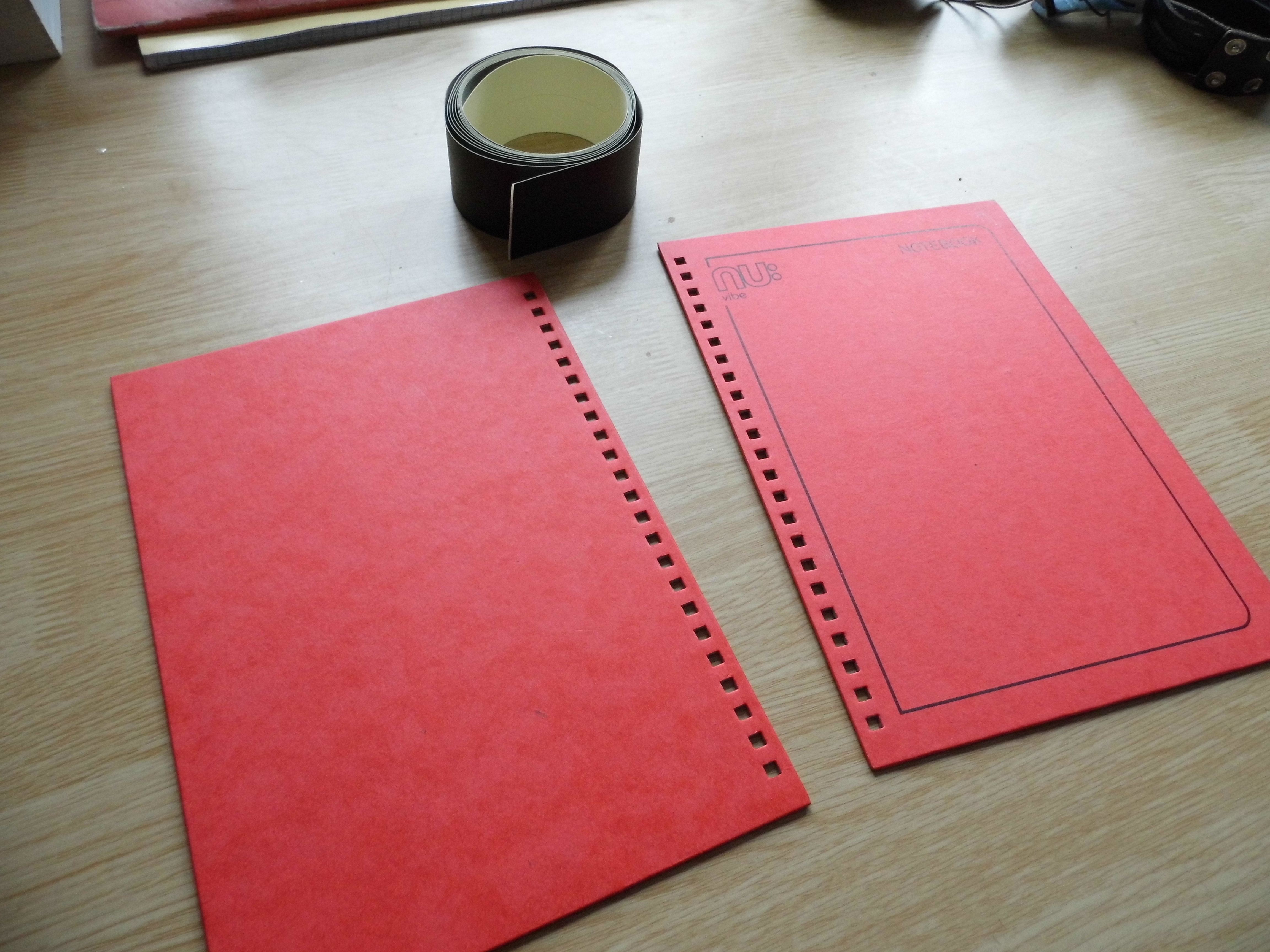
To put it together, I started with a plain hardback (A5) notebook from PoundLand (The Theatre of Dreams™) , and removed the pages and the metal spine so that I had just the front and back covers; which I (temporarily) taped together with book-binding tape to hold it together. I then sketched out a series of boxes, one to ten, along which the playing pieces would move in order to track levels.

I took the idea of replicating the Munchkin Deluxe board because I liked the idea of the board representing the dungeon that the adventurers are questing through, observed as a top-down view of a winding castle, or something. This way, it’s easier to figure out who’s in the lead and hence whether you want to either hinder them or lend a hand in return for bonus loot.

The next process was to paint up the background areas (green for grass outside the keep), and grey for the castle’s rooms. I used acrylic paints and a regular brush, and I quite wanted it to look ‘rough’ and weathered somewhat so I used quite a lot of dry-brush techniques to “scrape” paint onto the board. When I was done, I outlined the walls with a black Sharpie and then a silver-finish Sharpie for the inner section of the walls.

Munchkin_8

I wanted to add some definition to the inner walls, so I added a stone brick pattern to the outside faces of the walls with a very fine marker, just for funsies. I painted up the starting box (1) and ending box (10) up in more bright colours to reflect “Victory”, and designated each room with the relevant level number.

Because I wanted the notebook to represent a fictional dungeon-quester’s notebook (perhaps akin to a character notebook from Dungeons and Dragons), I wanted to give it a fantasy/role-playing feel so I removed the book-binding tape and replaced it with old, worn yarn that I found in the shed. I cut lots of thin strips of it (about 10-15 cm in length) and then tied them in loops through the holes of the original notebook’s spine. As a final flourish, I decorated the front of the board with the words ‘Munchkin Adventurer’s Notebook’, comme ça:


Right, so that’s the board finished, but what do we use to count? Well, instead of buying a Bag O’ Munchkins, I turned instead to shrink plastic to make some ~7 cm pieces to insert into plastic stands to represent each player.

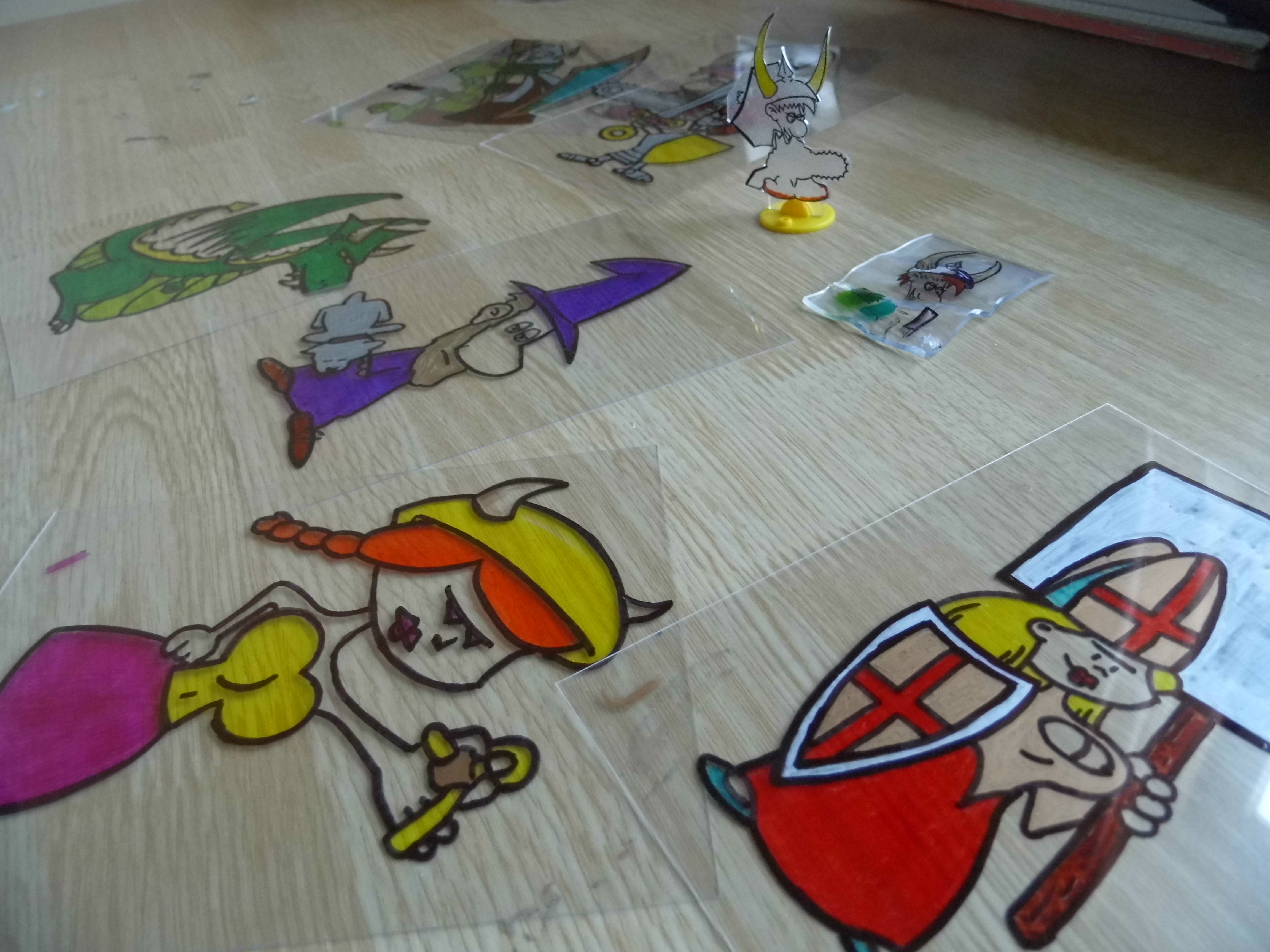
I scoured through a bunch of cards from the base Munchkin deck to find some interesting characters, scanned the cards in and blew them up before printing them to a scale that the character was around 12 cm in size. I used Shrinkies clear shrink plastic, traced the outline with a black Sharpie and then coloured in the relevant area with other Sharpie pens. I needed 6 (because Munchkin plays three to six players), so to be sure of not screwing up, I made nine pieces and cut them out; making sure not to leave too many ‘thin’ bits because I found that these tended to warp very badly when fired in the oven.

I set the oven to “grill” (PUNS.) and lined a baking tray with tin foil. Then, one by one, placed each sheet into the oven for a few minutes (until it goes all curly, shrinks down and flattens out again) before removing it and immediately pressing it under a heavy book in order to flatten out the piece. After touching them up a little bit with the markers where the ink slightly melted and smudged, they were placed in their plastic stands. Because one or two went badly wrong in the oven, and a couple ended up noticeably out of scale with the other playing pieces, I was left with six complete pieces: two male, two female and two monster-ish; which I put in stands, ready to play with 🙂

Munchkin_7

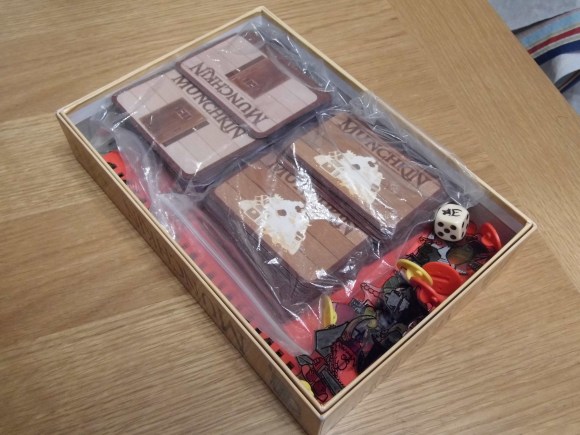
I’m pretty pleased! I think they look rad, even if no-one else agrees with me. Plus, everything still fits in my base Munchkin box, et voila:

P1050211

So yeah, GO GO GADGET CREATIVITY.

[Zinar7]

Tagged , , , , , , ,

friday_009

F009

In my entry from last Friday, I qualified my thoughts on video games and gaming by explaining that I find the process of play to be fascinating.

It’s true, I do find the act of playing to be something that’s always an interesting process – partly due to some of the more obvious excursions that play allows (role-playing as some far-flung hero; making decisions or play-acting in a way that doesn’t affect anything meaningful in real life; etc.), but also because I really enjoy engaging with other people in a ‘play’ scenario. That’s not to say that I don’t enjoy socialising with people in a normal setting or just offhand – I mean that I find it very interesting to see what other people do when they’re engaged in something that doesn’t have proper consequences in real life; to see what choices they make and what strategies they employ in winning the game or tackling the problem at hand.

For me, his fascination has, most prominently, been propagated through my expanding passion for board- and tabletop gaming; the social aspect of which still properly brings me a whole fuckton of joy. I miss the good times of the PlayStation/PS2 and Nintendo 64/GameCube console generation(s) where, routinely, four people would come together to hammer out a few rounds of GoldenEye 007, Micro Machines V3 or Mario Kart: Double Dash!!. There are, of course, exceptions to the rule but multiplayer video games now overwhelmingly force players to be separated by a connection barrier rather than just a simply sharing a multitap and a beanbag in front of the TV. Part of this feeling is borne of nostalgia, but it’s mainly a frustration at how good things used to be and how the community of gaming friends crouched around a tiny CRT monitor looking at a tinier quadrant of screen felt far more connected and social than the gargantuan, exhaustive ‘community’ that online play now elevates.

Part of the reason that I’ve grown so attached to tabletop gaming, I think, is that it helps propagate a worthwhile social aspect of play that has (rather disappointingly) all but vanished from digital gaming. Sure, text and voice chat still exists in PC and console gaming and it’s easy to arrange your friends to be connected to you in a virtual space, but it’s not the same as being able to gloat theatrically and extensively in the face of a friend – sitting right next to you – who’s just been blown up by a Blue Shell right before they cross the finish line and pipping them to the post.

In short: Sharing the same, physical, social space with a bunch of close friends while engaging in the process of play is infinitely more entertaining than getting 360noscoped and being called a homosexual by a fourteen year-old you’ve never met on the other side of the world.

The rise of German-style “designer” board games can, partly, be interpreted as a reaction to the ebbing sense of ‘social’ play in modern video games. As consoles have gained online capabilities in the last 10/12 years, (online) gaming has transitioned video gaming away from the “family” environment (with a small group of people in your own living room) to engaging with vast servers of unknown, random nodes across a gargantuan network. While board games have always been a popular activity – before and after the invention of video games –  I have definitely noticed a trend in how designer board games have swelled in number over the last six or seven years and even begun to infiltrate shelf-space in more mainstream shops (i.e. those that aren’t specialist gaming stores) on the High Street. I don’t think it’s a coincidence that these trends tally up quite so well.

Naturally, there are likely a whole lot of other reasons why these trends exist and it’s unlikely to be so simple a correlation that one can say, without question, that the shift towards online multiplayer video gaming has stoked the fires of Euro-style board gaming. But I think that there’s definitely a pattern involved, and perhaps it’s one that’s associated with gamers becoming a little disillusioned with the state of modern, AAA video games and aching to rediscover a sense of community play that seems to be growing more absent with each console generation.

In parallel, I’ve noticed a growth in the establishment of more, local tabletop gaming groups, and the population of existing ones swelling in number as more people discover the hobby. From personal experience, the genetic make-up of most of these groups tends to be formed, predominantly, of blokes in their thirties and onwards; at least, among those that aren’t based at, or very near, University campuses and the like. I might be painting with some fairly broad brush-strokes here, but I often feel like quite a proportion serious board game hobbyists are, perhaps, the kind of people that used to play video games but, perhaps, have fallen out of favour with them in the last few years; turning to tabletop gaming as more of an alternative. Of course, I haven’t canvassed the opinions of many of the board gaming community as to whether this is a 100% accurate deduction, but I’d be willing to place some stake behind being at least partially on the money.

The fact of the matter is, I still get a major kick out of engaging with people while we’re playing together; be it in digital world, or in a physical space. That passion is something that is hard-wired into me; like breathing and walking. But, the biggest buzz still comes when I collect together people into the same geographic location to play, and any method of making that happen anywhere and everywhere  is all good in my book.

[Zinar7]


If you’re into board gaming and attractive ladies – or, more specifically, attractive ladies playing board games and writing about them in an amusing and intelligent way – then you should check out The Misery Farm: How to Win Games and Alienate Meeple [themiseryfarm.com] because it has all of that and more, and blogs about board game-type stuff way better than I ever could.

Tagged , , , ,

friday_008

F008

This week’s Friday blog (and, likely, next week’s too) is going to be focussed a little bit on games of various sorts, because I find the whole subject of play to be totally fascinating.

It recently dawned on me that, as I approach my 30th birthday, very soon I will be taking my passion for playing video and computer games into my fourth decade on Planet Earth. Age-wise, I’m at the tail-end of the first proper generation of children that had video games as a major Thing in their lives, and I’ve been playing computer games as a serious hobby (and without any breaks) for 23-odd years now. Video games have been a constant presence in my life for as long as I can remember, and I’ve always fanned the flames of that passion by throwing myself into gaming at every possible opportunity and with every major console generation at, and since, the 16-bit era.

It’s only now, though, that I’ve sensed that I’m not really in touch with gaming anymore. I’m at a point, now, where I feel no great urge to make the leap into the current console generation of PlayStation 4, Xbox One and Wii U; nothing that draws me in to new hardware, nor encourages me to invest in the short-sighted output of AAA-studios and cash-hungry publishers. At least for the time being, I’m perfectly happy with my PS3 and my PC (and my Wii, my PS2, my GameCube, my DS, yada yada) and don’t feel like a few more pixels or some extra ultraFLOPs of processing power are going to lead to me having any more fun than the fun that I currently have with the machinery I already own, or owned in the past.

It used to be different, though: I remember the days of playing blocky, LucasArts point ‘n’ click adventure games where it was 100% about story and gameplay and not a jot about photorealistic textures, and hashy polygon-based stunt racing games where the absence of car physics and multi-reflective surfaces were no hindrance to the process of having a blast. I funnelled umpteen hours into Lemmings, The Simpsons: Bart Simpson vs. the Space Mutants, Sleepwalker, Soccer Kid and Lotus Turbo Challenge II, even though they looked like crap, didn’t necessarily play that well, and routinely broke or glitched out because of bugs or because the floppy disk was knackered. That was my era of gaming; one where I recall – with a misty-eyed expression – the simultaneous joy and frustration at having to constantly insert and eject Money Island 2’s ELEVEN floppy disks in order to load new scenes or dialogue to the game. Of course, while Monkey Island 2: LeChuck’s Revenge has lost none of its charm and brilliance in the intervening fourteen years, the likes of Race Drivin’ on the Amiga 500+ have long since been eclipsed by genuine progress in design and mechanics, and all but forgotten except by Nostalgia-nerds like me.

Looking at the broad spectrum, games are better now than they were when I first engaged with the hobby: they’re more shiny, better written, work better and are far, far more accepted by the mainstream than I ever dreamt that they would be. The leaps that were made throughout the 32/64-bit era (PlayStation and Nintendo 64) and then onto the 128-bit one (PlayStation 2, GameCube, Dreamcast and Xbox) were genuinely mind-blowing; where the improvement in graphical fidelity was also joined by progress in game engines (and hence gameplay), along with improved cinematic awareness and well-written dialogue and storylines. There’s a reason why many of the most highly-regarded video games (Final Fantasy VII, Super Mario 64, The Legend of Zelda: Ocarina of Time, Half-Life) came from those eras: it felt like mainstream/’AAA’-games were just improving in every way; but never at the expense of fun, and never forgetting that they were there for play.

In the last four-five years, though, I’ve sort of felt like I’m not the target of mainstream games anymore – The need for even better graphics (beyond what we have now; which I could call ‘perfectly adequate’ for representing an immersive virtual world) doesn’t really grab me, and the prevalence for newly-released games to have Day One bug patches or pay-unlockable DLC sort of makes me be a little sick in my mouth. Furthermore, I’m not into sports games like Fee-Fuh; nor ones where fourteen year-olds go around shooting each other with realistic military equipment whilst calling every other player a homosexual. The term “Gamer”, these days, conjures up visions of spotty teenagers playing FIFA 15, Call of Duty and Candy Crush Saga. I’m a person that plays games, but I’m not a gamer.

I’m also not loads into disrespecting women or doxxing anyone that doesn’t 100% believe in the same views as me, which seems to be a big part of calling yourself a “gamer” these days.

Nothing about the PlayStation 4/Xbox One output from their first 18 months or so has shown me that we’re any closer to the asymptote of Gaming Perfection than we were, say, eight to ten years ago, and there’s no sinew in me that feels the urge to make the leap to the next gen. I’m not here saying that “old games were better” or anything like that; my gaming collection still spans over 25 years’ worth of digital fun, and I wouldn’t have it any other way. All I am saying is that – Oculus Rift and VR aside – I don’t truthfully foresee anything truly revolutionary happening to my gaming palate as I turn the clock over from twenties to thirties. It’s been a long time since a new AAA video game truly took my breath away (BioShock Infinite was probably the last one that did that), so it seems like – for now –  it’s still up to the indie gaming scene and my existing collection to continue to produce the most interesting and relevant contributions to my gaming buffet.

So yeah, excuse me while I crack on with some Borderlands, Chrono Trigger and Citizens of Earth. Boom.

[Zinar7]

Tagged , , , ,

Café Carnage: Dev Update #1

CC_1

Ahoy there! I sort of semi-mentioned Café Carnage in my last Friday blog, but since I’ve now had some time to think more about possible ways the game could be improved (as well as getting a few tabletop gaming friends to play it and see what they think), I’d like to document the results of playtesting of Café Carnage v2.0 and offer some thoughts about what changes could be made. These game dev blogs are primarily a vessel for me to screw around with ideas and develop concepts, but hopefully that’s interesting to you guys, too.

So, in that spirit: onwards!

Divider

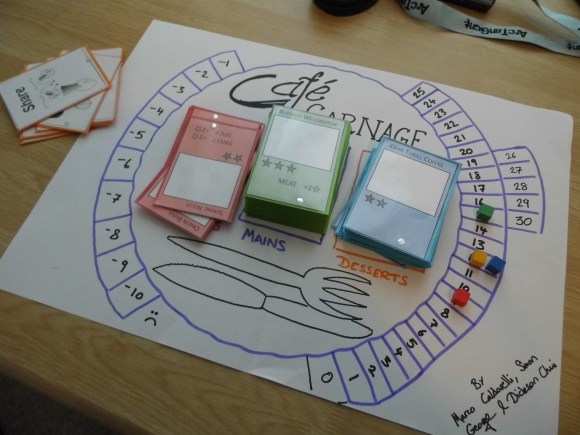
So, essentially, Café Carnage is a party game. A light, card-based game with minor elements of strategy and push-your-luck but, at its base, it is a party game (albeit – at the moment – only a party that only four people are attending). The version of Café Carnage [v1.0] that Marco, Dickson and I developed as part of the Global Game Jam 2015 (#SotonGameJam) was a very simple, party-game for four players; stripped of some of the more fancy ideas that we came up with, in order to get a workable, fun game completed in the 48 hour time limit. To download the Print ‘n’ Play version of Café Carnage [v1.0], take a look at the link below:

Print and play files: Café Carnage – Global Game Jam 2015 game by Marco Caldarelli, Simon George and Dickson Chui // Ages: 8 and above, playtime: 15-30 minutes.

In its primitive state, it’s a short, no-brain, luck-pushing game that essentially boils down to picking the right time to run from your bill-paying responsibilities: basically, picking the right day (of five) to play your “Run!” card and hoping that none of the other players play theirs at the same time – it’s a slightly amplified version of the famous Unscrupulous Diner’s Dilemma. There’s some slight more complexity and decision-making as to when to pick the best time to run, but, in essence, there’s a fairly clear way to victory that sort of becomes obvious once you’ve played it more than once.

But that’s fine: Café Carnage is intended as a party game; one in which you quickly bash out a playthrough in 15-20 minutes, call your friends “bastards” and perhaps have a chuckle or two along the way (results may vary).

CafeCarnage_3

The difficult problem now lies in how to develop Café Carnage [v2.0] and take it one step further into a more robust, more interesting game. After last week’s jamming, I’d sort of identified three key areas that I wanted to develop further in Version 2.0:

  • More players (5+)
  • More player interaction
  • More variation in the points/cost balance (and penalty for going over budget)

During #SotonGameJam, we only really tested and balanced Version One with 4 players. The idea of the game was, initially, to be a party game that could be played with a group of up to (say) 8 people who then debate over the bill; much like a large group meal IRL. The main logistical complication in adding more players lies in supplying sufficient number of cards such that, over the five rounds of the game, you’re not endlessly shuffling the discard piles and that there’s enough variety in the various dishes that diners can eat. Adding more players does, however, screw with the rules governing how diners can “Run!” from a meal and how only the ‘slowest’ diner (i.e. the player that consumed the most food that day and hence is the most out-of-shape) gets caught and all others escape without paying their bill – in a four-player game played over five rounds, the chances of 3+ players choosing to “Run!” at the same time is unlikely (in testing, rarely did more than two diners choose to “Run!” at the same time), but in a game with 6 or more players, you’re going to get multiple runners every round. How to ‘fix’ this such that one single diner doesn’t end up having to pay for 3-4 other meals (from successful escapees) is still an open question.

Regardless of any increase in players, a way of stimulating more interactions between the players is an important task. At present, players simply choose their three dishes (starter, main course, dessert) secretly from other players, and then the card showing what they choose to do when the bill arrives, before there is any engagement between the players in revealing what dishes they ate and revealing their chosen SHARE BILL/PAY SEPARATELY/RUN card. That there’s so much time spent simply doing your own thing means that there’s not only the potential for Analysis Paralysis (AP) to creep in, but also that the players are silent through this phase; which is not so fun. In Version One, what players choose to eat and choose to do when the bill arrives is in no way based on what anyone else is doing – you essentially do your own thing regardless of what other players might do, so you may as well be playing a solitaire game or playing against a droid. For Version Two, I’d love there to be more ways in which you can actually play against the other humans; be it by forcing engagement between players and revealing something about what everyone had to eat that day (perhaps, while everyone is eating their dessert, diners can choose to ‘grill’ [pun intended] a particular player about how much their starter or main course cost?), or more directly through bonus action cards or special powers that allow players to sabotage other diners’ meals.

CafeCarnage_1

One other thing that became apparent during the #SotonGameJam testing was that, even though Café Carnage Version One was incredibly well-balanced for four players (due, largely, to luck more than any tactical game design decisions), games would often end quite close in terms of the final scores of players. While this is not necessarily a massive issue, it does mean that games can be lost or won based on a single, minute decision (for example, choosing a one-star Starter dish rather than a three-star one); or worse, sheer luck. Furthermore, this also penalises heavily any player that is involved in an unsuccessful “Run!” attempt, because the requirement for them to pay for their own meal in addition to the meals of all other players who successfully escaped means that they’re near-guaranteed to end up way over their budget and heavily out of the running.

Aside from Version Two addressing the problem of multiple (3+) runners during a meal, it is fairly clear that a better cost/star ratio needs to be manufactured: in Version One, a one-star meal costs one ‘money’ (there’s no set currency for Café Carnage yet); a two-star meal costs two ‘money’; a three-star meal costs ‘three’ money, and so on. Because of this (and because any remaining budget at the end of the week contributes to Victory Points), points at the end of the game tend to vary between 35 (for winners) and 25 (for losers) – considering that players start with 30 ‘money’, this is not a huge variation (although not an unreasonable one).

There are some options for making this more interesting, and for elevating the tension as to whether the gluttonous diners successfully share the bill (thereby forcing other diners to share the burden of your expense): one is to modify the “exchange rate” between stars and ‘money’ – e.g. a one-star dish costs one ‘money’, but a two-star dish costs two ‘money’ and a three-star dish costs five ‘money’; but at the end of the game only stars count as Victory Points (not your remaining budget), but you lose Victory Points if you end up in debt at the end of the week. Alternatively, there’s the ‘Tastes’ variant that adds additional ways to earn stars/Victory Points as bonus value-for-money – each player is dealt a ‘character’ that appreciates certain types of food (e.g. Pepper Grylls likes her food to be vegetarian and/or healthy; Josh Rogan enjoys spicy foods, etc.), and bonus stars can be collected by choosing dishes that meet your diner’s requirements.

I don’t know what the solution is to this problem yet, but it’s good to have ideas.

CafeCarnage_4

Anyway, last Sunday, I gathered a bunch of my gaming friends ‘round my place to give Café Carnage a few rounds (with differing variants) to bash out some new ideas and brainstorm. I’m still thinking about the findings and feedback of that endeavour so I’ll leave those thinkings to the next post; but suffice to say that, after playtesting, I would like to add the following goals to the initial three that I laid out earlier in this post:

  • Less downtime/AP/potential for decision-making (and less shuffling time)
  • Action cards and during-dinner hijinks (e. stuff happening between courses)
  • Physical money (instead of a money-track)

So yeah, there you have the basis for Café Carnage Version Two. I’m still working hard on thoughts for Penny Black and my binary game, Bit Pattern, but I’m fairly pleased with the progress with “café game” as well 😀 Until next time, then. Godspeed!

[Zinar7]
Tagged , ,

friday_004

f004

Last weekend, in less than 48 hours, I helped design a novel café-based card game from scratch.

I can scarcely believe that it’s been a whole seven days since the beginning of the whirlwind Global Game Jam 2015 / #SotonGameJam tsunami that wiped out 48 hours of my life last weekend but, evidently, it has. I’ve got a bigger game dev-based post in the works in which I want to write about my various board game projects (Penny Black, Babbage and, now, Café Carnage), so I won’t take up too much time here with them, but yes, in 48 hours Marco, Dickson and I came up with a brand new card game called Café Carnage as part of #GGJ15, and you can download the print ‘n’ play files here ~

Print and play files: Café Carnage – Global Game Jam 2015 game by Marco Caldarelli, Simon George and Dickson Chui // Ages: 8 and above, playtime: 15-30 minutes.

Café Carnage is a party, bluffing-type game where yourself and three friends decide to visit five restaurants with an initial budget of £30, and attempt to eat the most food whilst trying screw your friends over by getting them to share the bill when you’ve eaten heartily, or running away when it’s time to pay the bill. In the end, we actually managed to pretty much come up with the whole of Café Carnage in less than 20 hours after a false start where we focussed on a different concept, which sort of makes it even more surprising that we actually have a game to show at the end of it. And it works! It’s not the world’s best tabletop game nor is it free from minor problems and limitations, but it’s a playable game and (at least from the playtesting we managed to get done during #SotonGameJam) people seemed to be enjoying it 😀

There’s more work that can be done on it towards refining it, but it’s totally playable as it is for four players looking to have a quick, light-hearted bit of fun ordering food and trying to bluff your way out of the bill. So yes: overall, in between the panic-designing and epic exhaustion that were sort of hallmarks of the jam, I had a good time at #SotonGameJam. It certainly proved a dramatic, rollercoaster way of spending a weekend; even if it did – at times – help to fuel the raging inferno of insecurity in my own abilities and ideas.

Recently, a lot of my insecurities have (sort of) come to the forefront of my mind and hammered away at my sanity more often than I’d like. Over the years, I’ve become quite good at burying the insecurity and covering it up with distractions or occupations or (more genuine) stresses and strains; but, with my current situation of being between-jobs and on my own at home for most of the time, there’s considerable time for the insecurity to chisel its tiny way into your sanity and start tinkering away into your confidence and self-belief. I’ve never been particularly affluent in self-confidence and self-esteem but, recently, things have sort of accidentally conspired to erode what faith I did have in myself; causing me to doubt the confidence in my outward persona and the things that I say, make and create. The general result, essentially, is that I’ve had too much time to overthink a lot of things, and to reflect on where I am in life/love/legacy and whether I measure up to the imaginary standards I’ve concocted that I think the world is expecting me to live up to.

Whenever I’m faced with a question of “whether I’m good enough”, I naturally end up comparing myself to unrealistic benchmarks (famous people, fictional characters, people that I perceive to be “winning at life”) and conveniently forgetting about the millions of other people around me that have normal lives and normal expectations set of them; as well as the flaws & imperfections that my beloved ‘benchmarks’ inevitably possess in addition to their positive qualities. My brain knows that, rationally, there is no point in comparing my physical appearance with that of Tom Hiddleston but, for some reason, it seems to interpret the fact that Tom Hiddleston exists – and is uncomfortably pretty and charming – as some sort of sleight on myself and my own looks. I can sort of understand where it’s coming from, though: when Hiddlesexy is wandering about on the same celestial body as I am, who the hell would be physically attracted to me?

The thing is, such thoughts are far from helpful. I might be wholly unconvinced by my physical looks and (most of the time) think that I’m some sort of hideous troll, but that’s not to say that everyone else thinks the same, too. Naturally, I see my flaws and my imperfections because I’m looking for them, and I see them every day in the mirror or in my brain or in my hands and am continually reminded that they’re there. They’re there, right in front of me, all of the time and, because of the way my brain works, they blot out all of the good bits that aren’t flawed or opaque and cause me to forget all that’s good about me and the confidence I have in myself & my abilities. Deep down, I have trust that I’m not a terrible person nor possess the world’s most repulsive appearance, and that I have qualities that People value and want to have around them, but the brain sometimes has rather unhelpful ways of trying to be ‘helpful’.

It’s been a bit of a choppy sea that I’ve been sailing in these last six months out of long-term relationship, and I’m still finding my sea legs. I’m still properly figuring out where I stand in the world, now that I’m standing in it on my own; and, in trying to establish my comfort zone, I’m sort of still feeling around for signs that I’m doing things right and that everything is okay. I’m the sort of person that wears their heart not only on their sleeve but on their every facet, and so it’s sometimes easy for my exposed heart to find itself injured in the process of everyday life – in the absence of corrective feedback or affirmations of “yes, you’re doing things right”, my brain tends to interpret the neutrality as indications of my visible failures or inadequacies. Again: not helpful, brain.

I need to let go of who I think I’m supposed to be, and embrace everything that makes me, me; imperfections and all. Just because I am not some famous, swooning celebrity who’s solved cold fusion and won a Best Actor Oscar and climbed Everest does not mean that I am not still a kind, generous, intelligent, thoughtful, funny person that’s – in his own way – unique and talented and beautiful.

I can do a lot of things that a lot of other people couldn’t even consider doing: I mean, last weekend, in less than 48 hours, I helped design a novel café-based card game from scratch. I bet Tom Hiddleston couldn’t do that, even if he would look infuriatingly pretty whilst trying.

[Zinar7]

Tagged , , , ,

friday_003

F003

On Wednesday, I resurrected an old friend and restarted the bi-weekly (ish) ritual of sitting down with a few friends and watching some crappy, cheesy, low-budget horror films. This used to a regular thing that we did a few years ago and many good times were had but, in more recent years, life sort of got in the way and we kind of forgot about it. Anyway, with the turn of the New Year, I felt it was time to shamble down to cemetary again and dig up the corpse of the magnificent ScareFest such that we may, once again, marvel at unconvincing acting, horrendous special “effects” and terrible storylines in the company of snacks, drinks and good friends.

The original idea was to establish a night dedicated to watching pairs of horror B-movies: one properly in the realm of Z-movie horror with crappy budgets; one relatively good one with a moderately bigger budget and fair critical acclaim. Such fun was kicked off on Wednesday with ScareFest #01: Dolls and Dogs, which married the low-budget Doll Graveyard with the minorly-higher-budget-but-still-not-a-huge-budget Dog Soliders. It turns out that both performed pretty much as expected; with much commentary on low-budget actors trying to ‘do’ the ‘acting’ thing, confusion as to why the back of the DVD box for Doll Graveyard recounts a completely different premise for the film than the one shown onscreen, and excitement at the appearance of Davos Seaworth from Game of Thrones as a Special Forces Captain in Dog Soliders.

Anyway, the proposed schedule for ScareFest: Season One is thus:

ScareFest #01: Dolls and Dogs
Doll Graveyard (Charles Band, 2005) and Dog Soldiers (Neil Marshall, 2002)

ScareFest #02: Creaturezoids
Creepozoids (David DeCoteau, 1987) and Feast (John Gulager, 2005)

ScareFest #03: Biohazard Detected
Spiders (Gary Jones, 2000) and The Rage (Robert Kurtzman, 2007)

ScareFest #04: You Had Me in Stitches
Skinned Deep (Gabriel Bartalos, 2004) and Stitches (Conor McMahon, 2012)

ScareFest #05: Cradle of Flesh
Cradle of Fear (Alex Chandon, 2001) and MindFlesh (Robert Pratten, 2008)

If you would like to join in the horror movie fun, then you are very welcome to – give me a shout or something and I’ll add you to the next event! Also, if you have any crappy B-movie suggestions then I’ll add them to the rota 😀

Anyway, onto less horror-film climes: today marks the start of #SotonGameJam, which is part of the Global Game Jam 2015; an initiative to have a whole bunch of people, scattered across the planet, to design a game (digital or tabletop) in 48 hours. The Southampton portion of #GGJ15 is being co-organised by a few people I know, and the jam itself will be happening all weekend in one of the computing labs at the University of Southampton. I don’t really know what my game will end up being about, but thinking about it has already sparked some ideas about designing some kind of card game that revolves about binary numbers and bit patterns – Of course, maybe that’ll go completely out the window when we learn the (as-yet unannounced) theme of #SotonGameJam, but it’s still exciting stuff and I’m mega looking forward to getting involved.

Whilst I’m clearly already getting excited about my next board game design project, it’s notable that I still haven’t gotten much further with my other game-design opus, Penny Black, since I last blogged about it – largely, I’m too scared to play-test it and discover its flaws, lest it shake my confidence in what my creative juices can help to lubricate. Like many artists, I’m often too much of a perfectionist to fully relinquish control of what creative output(s) I manage to spew forth and, likewise, am very sensitive to criticism (even If it’s constructive). I suppose that I should just fucking do it and set up a playtest night with a few friends to give it a try with four players, and see what happens. I’m not sure what I’m really scared of (perhaps it’s finding something game-breaking or fundamentally wrong with what I’ve dreamed up), but I trust the opinions – and compassion – of my tabletop friends not to completely slam it, so I really should just roll the dice, deal the cards and see what happens. Hey, who knows, maybe it’ll be really good? And hey, if it’s not, then the feedback will be constructive and make the game better and, maybe, somewhere along the line, something awesome might happen with it. You never know ‘til you try, do you?

On the subject of game dev that I’m totally taking undue credit for, this week Citizens of Earth came out on Steam and pretty much every console ever, and towards which I very minorly contributing by doing some beta-testing way back in 2014. I’ve not played the most recent build and haven’t played it all the way through (I was involving in bug-testing of the very early section of the story and in combat and stuff), but from what I was involved in, it looked exactly my kind of turn-based (J)RPG-type game and I’m heavily looking forward to actually giving it a bash. I didn’t delve into any code and I was mainly looking at playtesting and usability and in-game bugs/crashes, but it’s nice to feel like I helped to make it better in some way. I considered making a proper video game for #SotonGameJam, but my coding skills are totally not in prime physical fitness for making anything other than a very simple, turn-based/logical strategy-game-thing, and I figured that I could have more fun doing the same sort of thing in the physical realm (with cardboard tokens! And wooden cubes! And 3D-printed Cthulhu meeples!) anyway.

Anyway, I’d better get shiftin’; I’ve got game-jamming to do. Let’s get to it.

[Zinar7]

Tagged , , , , , ,

Sinister Reviews #14: Gabriel Knight – Sins of the Fathers

GKSotF

Genre: Point-and-Click Adventure
Platform: PC (version tested), Mac
Release Date: October 2014 remake
Developer: Pinkerton Road Studios
Publisher: Phoenix Online Studios

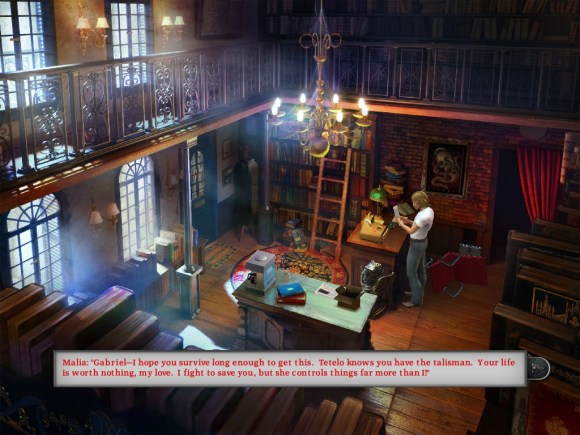
I missed Gabriel Knight: Sins of the Fathers (GKSotF) the first time around. Y’see, I was always a LucasArts brand of adventure-hound rather than a Sierra one; craving the comedy adventures in the vein of Monkey Island, Grim Fandango and Full Throttle (along with other, non-LucasArts games like Simon the Sorceror and Broken Sword) rather than more serious titles, like Gabriel Knight. However, since 2014 marked the twentieth anniversary of GKSotF’s release and saw release of an anniversary remake by Pinkerton Road Studios, the time seemed as good as any to leap into the world of Gabriel Knight and his roguish brand of amateur crime-solving.

GabrielKnight_1

Jane Jensen’s Gabriel Knight series still remains a heralded classic in the point-and-click canon, touching upon a tale of murder-mystery stuffed with conspiratorial happenings, secret voodoo cults and suspicious events. The titular Mr. Knight is a brash, book shop-owning novelist from New Orleans, who becomes increasingly involved in police investigation of a case known as the Voodoo Murders through his friend Detective Moseley, before getting in far over his head. Over the course of ten game-days, the player must manoeuvre Knight around various scenes and locales of New Orleans (and, later, Germany and Africa); examining objects, harassing the townsfolk and using objects with other objects in the time-honoured point-and-click fashion. However, what sets GKSotF aside from the average is Jensen’s superb narrative: where my childhood adventuring through the LucasArts catalogue mainly stroked the soft underbelly of light-hearted storylines and comedic set-pieces, GKSotF tackles far more dense subject matter; a true crime thriller, with its fair share of grisly crimes and decidedly ‘grown-up’ themes. It’s reminiscent of a page-turning detective novel, with some excellent story pacing and an array of suspicious characters all, inevitably, involved in a complex web of mystery that maintains a respectable level of tension throughout the experience.

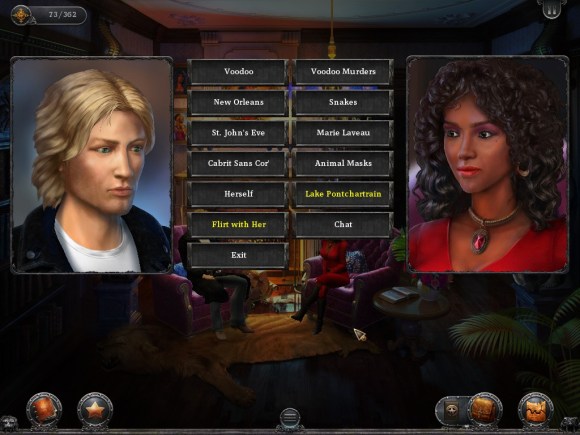
A key part of maintaining this atmosphere lies in the engaging, well-balanced, puzzle design. While some puzzles will have you scratching head for a while, they rarely feel unsolvable; yet, never facile, either. Solutions are never made too obvious (nor is the player ever steered toward them using petty hand-holding), yet pose a median level of difficulty that don’t challenge either the player’s intelligence or stupidity. Furthermore, the puzzles all maintain relevance to the ongoing storyline and police/spiritual investigation, meaning that the game largely doesn’t feel padded out with extraneous hoop-jumping or completely bizarre, shoehorned puzzles. To my knowledge, there was only one occasion where I hit a puzzle that I would never, ever have solved without the hint system (spoilers: it was the exact wording for what I was supposed to write on the tomb wall in the voodoo code) and, of course, the ‘engage with the mime’ puzzle near the beginning of the game is possibly the most tedious puzzle that I’ve ever encountered in an adventure game, but we all make mistakes.

GabrielKnight_2

GKSotF should also be commended for not relying too much on the adventure games staple of constant back-and-forth between characters or scenes to progress the action; not that engagement with NPCs feels too much like a chore. Aside from the game’s abrasive voiced narration (which, thankfully, it is possible to mute), voice acting varies from ‘really good’ to merely just ‘acceptable’, and the initially-tedious dialogue animations certainly endear and lose their irritation. Dialogue trees are also well-constructed to avoid too much repetition and deliver the ongoing narrative in a focused, natural way. In this respect, the presence of a physical narrator of Gabriel’s actions feels like an alien concept (at least when compared to the LucasArts style of having the main character comment, narrate and break the fourth wall) since it disengages the player from Gabriel himself, but adds to the feeling of being involved in a detective serial or TV movie. Pretty much all of the dialogue, scenery and storyline are – I’m led to believe – faithfully recreated from the 1993 original version of Gabriel Knight: Sins of the Fathers (except now rendered in prettier high-definition graphics and cut-scenes) and it’s satisfying to find that GKSotF has aged commendably in the intervening two decades.

In general, the updated character models are well-rendered; faithfully-recreated scenes are packed with prettiness to look at and it all represents a fairly solid modern take on Gabriel Knight: Sins of the Fathers. If there’s a weakness in the visual and atmospheric update, it’s in the game engine – the commitment to re-drawing scenes from the original leads to the limiting decision to use high-definition, 2D backgrounds with 3-D Unity-driven character models walking overtop, rather than fully-3D scenes. 99% of the time this raises no issues, but occasionally presents unfortunate graphical glitches and evidence that the gameworld is merely a 2D plane with characters pacing around atop a stationary texture. It’s not a game-breaker, but merely leads you to occasionally feel like you’re playing an adventure game version of The Sims.

[FYI, if you want to get hold of the original version of GKSotF, then head over to GOG.com]

GabrielKnight_3

But, I’m nitpicking: the fact that you notice such mild gremlins and glitches is simply because the rest of GKSotF is so solid and enjoyable. Sure, the storyline drifts off a little in the last third – away from the more interesting ‘police’-type investigation and toward a more linear path of “do this, then do this, then do this”, which feels just a teeny bit padded out – but it’s because the majority of the game feels so well-paced and –balanced in terms of both narrative and gameplay.

In truth, I was expecting to be a little disappointed by Gabriel Knight: Sins of the Fathers. My curiosity had been piqued by Yahztee & Gabe’s playthrough of the first hour or so on Let’s Drown Out, and I’d expected to be mildly engaged by the storyline but to find fault with the game’s mechanics and object/NPC interaction. Imagine my pleasant surprise, then, to discover that it’s one of the best adventure games that I’ve played in recent years. Despite a few flaws, it’s still a masterclass in adventure game design and well worth a visit for the narrative exposition alone. Perhaps it’s testament to the forward-thinking innovation of the original, or the persistence of the point-and-click genre in being stuck in the mid-Nineties, but if ever there were a time to discover the world of Gabriel Knight (or perhaps just revisit it), then it’s now.

[Zinar7]

Tagged , , , ,

Penny Black: Dev Update #1

PennyBlack_1

For those that aren’t aware, I’ve been working on a board game. It’s been boiling around in my head since May or so; where it initially saw a great flurry of activity but, due to various other things, kind of got put on the backburner until a few weeks ago. However, in the last month I’ve focussed more time on it and into getting it to a position where I (and perhaps a group of friends) might be able to actually give it a try. Hooray!

The title of the game is Penny Black, which some of you might recognise as the name of the world’s first postage stamp designed by Sir Rowland Hill in 1840 for the Royal Mail. As you can therefore imagine, Penny Black is themed around a fictional Post Office; not in Victorian England but in the fictional Republic of Sinestria. So, what’s it all about? 

PB1


SUMMARYPenny Black is a strategy board game with a postal theme. Players take the roles of trainee sorting-office workers in the Mighty Republic of Sinestria, where the postal system has recently been introduced. In this role, players compete to serve customers, stamp their letters and process them into the Post-Bot’s mailbag in order deliver these to the intended recipients and earn points. However, the citizens of Sinestria are sceptical of this new postal system, and players will need to meet their various demands and expectations in order to secure the success of the Sinestria Republic Post.

The more letters that are picked up and delivered, the more trust players will acquire from the public (measured in terms of Victory Points) and, at the end of 7 days of training, the performance of the new trainees will be rigorously assessed. If players misplace letters or deliver them late, they will lose trust from the public. Furthermore, fellow players will be aiming to hinder each other or engage in outright sabotage, so players must maintain awareness of the competition.

Due to a malfunction, the Stamp Machine does not output the correct stamps but instead spews them out randomly onto the Sorting Office counter. Players will need to collect the correct stamps, pick the most viable customer letters, and make sure that they are in the Post-Bot’s mailbag at the correct time in order to score Victory Points.

The Chief of Post for the Government of Sinestria has vowed to permanently hire the most successful worker to be elevated to the position of Post-Office Manager, a highly respected position, based on players’ performance in efficiently collecting stamps, sorting letters and getting them into the mailbag at the correct time.

Divider

I’ve just reached a point of having the rules for v0.1 of Penny Black pretty much shaped up and written down. I’m yet to get round to playtesting, but I’ll look into doing so at some point over the Xmas period. If you would like to know what the hell Penny Black is all about (and, indeed, what the hell I’m talking about during the rest of this post), then a .PDF of the rules is here:

PennyBlack_v0.1 (December 2014, .pdf)


DISCUSSIONThe main concept of Penny Black is similar to a number of games that require collection of tiles/resources in order to purchase other cards, which require a varying combination of resources – these include titles like Unexpected Treasures (by Friedemann Friese) and Felinia (by Michael Schacht). In Penny Black, these, purchased, cards must then be redeemed by placing them in the mailbag at the appropriate time (and in competition with other players who are looking to do the same, perhaps with some amount of skulduggery) in order to score points.

Hopefully what is unique about Penny Black, when compared to other games based on collecting stuff and using it to buy other stuff (even so far as Alhambra by Dirk Henn), is that there is a ‘timing’ aspect to having the right things at the right time, and in the right place: the mechanic of having a semi-random method of dictating when a letter delivery takes place (defined by a dice roll which may mean that the Post-Bot moves at a steady 1-step pace [most likely], a rapid 2-step pace or does not move at all [least likely]) means that there is, hopefully, unpredictability as to when points are scored; wrestling complete control from the players and adding more tension along with incentive for skullduggery. The unpredictability of what exact delivery conditions (i.e. what earns bonus points for players when a delivery happens) also, hopefully, adds to the variation between games and leaves players guessing as to what will earn them points.

PB2

The main method of how players collect stamps is one of the key parts of Penny Black that I still don’t yet have a solid ‘feel’ for. I expect that over various iterations of the game, how stamps are collected by players will likely evolve a bit; perhaps taking cues from other games. For example, Felinia lets you collect similar tiles based on a ‘bidding’/market system, although this requires application of some sort of currency system which would add extra complexity to the game. I thought about some sort of worker-placement mechanic, but this seemed like an overly elaborate way of simply collecting resources. Maybe I’ll look into playing other games with similar mechanics, and see if there’s anything I can borrow or adapt if the current mechanic doesn’t feel quite ‘right’.

In the first iteration of Penny Black, the mechanic to collect tiles is largely similar to that of Ticket to Ride (by Alan R. Moon), yet with some similarities with Splendor (by Marc André): there is a general pool of stamp tiles, drawn randomly from a bag, that occupy six stamp spaces on the game board. On a turn, players may choose an action to activate the Stamp Machine, which re-fills any empty stamp spaces (left empty after previous players have taken stamps), and then choose three stamps to take from the available pool. Players may hold seven stamp tiles at a time. From their collection, players then trade the correct stamps with those depicted on an available customer letter in order to ‘stamp’ it and to prepare it for delivery, or use certain combinations of their stamps to influence the motions of the Post-Bot to speed up or slow down the time until delivery, or to kick out another player’s letter from the mailbag and replace it with one of their own. Yes, I know the Post-Bot is currently R2D2, shut up.

PB3

Another aspect that isn’t currently in place in Penny Black is the concept of having ‘special’ stamp cards. In addition to the way that basic stamp tiles are drawn from the bag and players may pick from them, I’m toying with the idea of having additional stamp cards that either allow a player to use them as any individual stamp, or perhaps as a double-stamp of a single colour. Further to this, something that isn’t yet fully-formed in my head is the method by which the Post-Bot either adds incentive (or penalises players) when it has reached the end of the Delivery Track yet the mailbag is not sufficiently prepared. It might be that an elegant way of killing both birds with a single stone would be to have the Post-Bot give special ‘one-shot’ stamp cards to all players that succeed in delivering a letter; although I’m aware that this might leave certain things overpowered, or lead to situations with runaway winners. In the current iteration (v0.1) of Penny Black there’s no facility for this yet, but it might be worth considering in a later iteration to see how it works. Certainly, I feel like a technique whereby players are rewarded for putting letters in the mailbag (not necessarily just for delivering them) could be an option; which might be as simple as taking a stamp tile from the available stamps on the Sorting Office Counter.

Divider

So, in a nutshell, that’s Penny Black. Of course, it’s going to take a lot more shaping up and refining before it’s something that could potentially be released to the outside world but, even at this very early stage, I’m bloody proud of how far I’ve gotten with it.

The next stage, really, is to test the game with some actual play. After I’ve fiddling with it myself and an imaginary table of gamers, I’m going to look into recruiting a few friends to giving it a go and providing some feedback on the game (in addition to identifying the glaring holes or errors in design). With a game like this that will require a significant amount of balancing in terms of how many points successful deliveries should be worth, how long there should be between deliveries, how easy or hard it is to collect the right stamps and purchase letters, etc. I feel that there will be a lot of tweaking necessary to weigh out the game so that it brings a balanced atmosphere. I’m intending on documenting the progress fairly methodically to establish what’s working and what’s not, so expect more posts in this series on the continuing development of the game and my thoughts on it.

If you’ve got ideas on thoughts on the status of Penny Black, then I’d love to hear what you think. Hey, maybe it inspires you to think about designing your own game; or just creativity in general. If I can spark some imagination surrounding interesting board game themes or creativity, then that’d be awesome.

[Zinar7]

Tagged , ,

Scary Monsters and Nice Sprites

Scary
Since tomorrow is the 2014 edition of the Capitalism-fest that is Hallowe’en and the “scary things” closet has already been opened once again and a whole bunch of horror media sent barrelling our way, I thought I’d consider the role that video games play in our annual celebration of creepiness. Hurrah!

I’m a sucker for horror movies: creepy ones, silly ones, gory ones; you name it, I’ll devour it. Horror video games, on the other hand, can GET THE FUCKING HELL AWAY FROM ME.

Joel Cuddles

Largely, horror films completely fail to give me the creeps: perhaps it’s the knowledge that it’s all just a big scam, and the girl being chased by the guy with the big axe isn’t really being chased, and the guy with the big axe doesn’t really want to examine the girl’s internal organs in minute detail and with the complete opposite of surgical precision. Like everything in the movies, it’s just a big ol’ fake and there’s really nothing to be scared about at all.

At best, a surprise set-piece will give a brief shock, but never nightmares: the only things in recent memory to actually, properly, scare me were the Spanish original of [.REC] (which, incidentally, I will never ever watch again; not because it was too scary, but because the next time I see it will be a disappointment and I want to maintain it as one of my favourite horror films of all time) and pretty much all of The Descent (which was largely an hour and a half of Scary Things Jumping Out at You in the Dark™). Aside from that, I’m pretty unshakeable even in the face of maddening terror. When it comes to horror video games though, then you can rewrite all the rule books and Consequences Will Never Be the Same.

It’s here that I should probably define what I mean when I say “horror game”:

Horror Game [hawr-er geym]

n.  A video game whose predominant function is to scare, or thrill, above and beyond a regular ‘action’ game.

“I played this horror game last night and it was so scary that I accidentally vomited out my internal organs.”

It’s not a necessary prerequisitive for horror-games to be action-based, but most fall under the well-trodden banner of ‘survival horror’: your Resident Evils, your Silent Hills and your Alone in the Darks. These (almost universally) place you in the scope of some city-wide outbreak of nasties keen to chew on your face; away from which you must navigate your way (from fixed camera angles) in a third-person manner whilst simultaneously trying to find your wife/daughter/dog and understand what the hell’s gone wrong with the world. Even so, there are plenty of other horror-filled titles that meander away from the standard ‘shoot at and run away from the monster things chasing you’ to encompass psychological horrors, as well as the physical ones. I can categorically say that I will never, ever ever ever play Amnesia: The Dark Descent: I may own it on Steam, thanks in some manner to some Humble Indie Bundle somewhere along the line, but I’ll never install it.

Broadly, I watch horror films to be amused (usually by their shocking production values, hilariously bad dialogue and entertaining special effects), not to sit on the edge of my seat. but I can at least appreciate that some find horror films “scary” in some way. Horror video games, on the other hand, require direct input and often an emotional attachment (likely with the main character or perhaps for a “damsel” in “distress” that provides the key focal point for the story slash action) which amplifies the terror through your desire to see them survive the ordeal.

With a horror film, you know everything’s on rails and that the horror will progress without your direct involvement; you’re just along for the ride until the credits roll. If you do get scared, the action will progress regardless and you’re safe in the knowledge that, in 1-2 hours’ time, it’ll be over; no matter how much (or little) you engage with the scares. Where horror movies largely stick to the same sort of tropes (meaning you can largely predict how and when the scares are going to take place, who’s going to die, when something’s going to jump out, yada yada), proper horror games don’t have the same heritage and traditions and are tend to be far more innovative and inventive with how they give you the creeps. Aside from the more direct input that the player has on the action in a horror game than horror movie, this might also arise because of the relative infancy in which horror games inhabit, at least when compared to the 100-odd-year history of cinema.

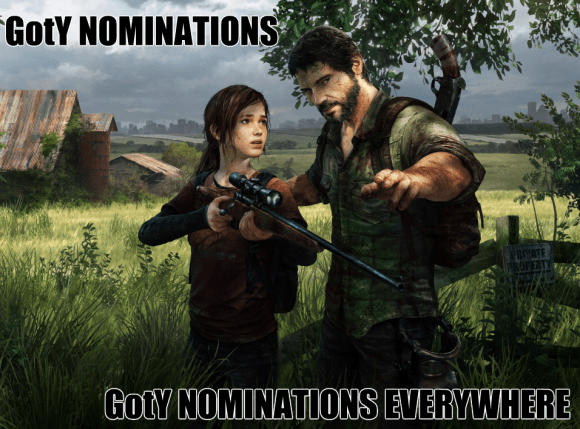
Around this time last year, Naughty Dog unleashed one of the defining games of the PS3 generation in the form of The Last of Us; a survival-horror (ish) adventure game combining tension, emotion and zombie-ish things into a snowball of praise and Game of the Year (GotY) nominations from gaming critics. A year on (and with its recent re-release on PS4 in the form of a ‘remastered’ edition), many critics still view it as the high point of the previous console generation, drawing comparison with some of the ‘greats’ of cinema and banding around nicknames like “the Citizen Kane of games”. Still, given that the first, proper, piece of horror cinema is almost a century old now (widely accepted to be the creepy, unsettling The Cabinet of Dr. Caligari), it’s unsurprising that video game developers have caught on to the main tricks of making a survival-horror game scare both physically and psychologically, becoming genuinely innovative with its horror engagement and leaving much of cinema’s generic horror output writhing in the dust.

LastOfUs

Given the immense (and almost universal) acclaim in which it is still held, I kind of feel I should play The Last of Us, but it just doesn’t grab me enough to give it a go (pun very much intended). I don’t go overboard for survival horror, and never have been: I think one reason why I dislike survival horror is that it takes itself so darned seriously (that Silent Hill dog ending aside), whereas all my favourite horror films (The Evil Dead, Saw, The Happiness of the KatakurisZombieland) are those ones that blow things over the top and deploy entertainment and/or comedy to complement the terror. The slow, tense styles of most survival horror titles hold no sway: the prospect of having to tensely save ammo/health and be frightened to death around every corner is often not the greatest motivator.

Instead, I prefer to be far more ‘gung-ho’ in my gaming style: it’s much more enjoyable to be charging around levels at full-tilt, full unloading clips of ammo in every available direction and trying to have as much fun (and cause as much chaos) as possible; preferably to a soundtrack delivered by Andrew W.K. or Turbonegro or something equally mental. This does, however,tend to make me a bit rubbish at stealth-based games like Thief and Hitman, let alone standard survival-horror games where you’re encouraged to save every last bullet and avoid alerting the entire zombie horde by careering around throwing grenades at the scenery. For shoot ’em ups of every colour and creed, I far prefer those that distribute copious amounts of ammunition and supply copious hordes of ghoulies/baddies to use it on; such as the glorious Bulletstorm or the masterpiece of Halo. “Saving some ammo for later” just isn’t in my dictionary, and I wouldn’t have it any other way.

When I do stray into the darkened realms of horror gaming, I tend to to fall back on my love for zombies and zombie movies as a crucial pivot and gossamer connection to the world I know and love. And, even then, I like my zombie games to be entertaining struggles rather than bleak journeys of mere survival based on scavenging for crumbs of survival; the likes of Dead Rising and Left 4 Dead providing far more amusement than any number of repetitive, po-faced Resident Evils. I’ve recently been playing through Organ Trail (Director’s Cut) once again; clocking ever more hours into its cheesy, tongue-in-cheek conversion of the classic Oregon Trail into a homage-filled zombie survival adventure and enjoying every minute of it. And even then, if Plants vs. Zombies still isn’t the best zombie game ever made, then I’m a giant heron.

Okay, so enough about full-on ‘horror’ games; what about scary monsters and nice sprites in mainstream gaming at large? There’s an increasing trope for so-called ‘regular’ (non-scary, or mainly non-horror-based) games to artificially use ‘scary’ sequences to add to the drama or tension of a regular ‘action’ game, particularly in first-person person shooters, to varying degrees of success. Half-Life 2‘s superlative Ravenholm sequence is still one of the scariest (and most memorable) sequence in a modern first-person shooter, whilst the Sander Cohen section from BioShock – with all of its weeping angel-style mannequin-splicers and haunted theatre props – is one of gaming’s most expertly-executed creep-fests. Whilst Treyarch’s Call of Duty titles – with their schlocky zombies and undead Nazi footsoldiers – just feel like a tired resurrection of the same old trope of taking a standard game and trying to shoehorn some shocks into it, Red Dead Dedemption‘s glorious DLC/story expansion ‘Undead Nightmare‘ managed to implement a superlative zombie mode with infinite more care and grace.

Aside from traditional survival-horror games, there’s still a whole bunch of originality to be found within the ‘horror’ genre; resisting the mainstream horror genre’s tropes of endless wandering through endless dark, tight, grey corridors shooting zombies and collecting herbs. The likes of Project Zero (multi-platform, 2001-), Eternal Darkness (GameCube, 2002) and Cursed Mountain (Wii, 2009) come critically acclaimed by those in the know, demonstrating that there’s innovation to be found if players wander off the beaten survival-horror path, and the indie community also seems to be leading the charge in horror gaming of late; with particular successes such as the aforementioned Amnesia series, Penumbra: Black Plague and, this Hallowe’en’s breakout hit, Five Nights at Freddy’s. The equally-fascinating and terrifying Slender: The Eight Pages (which I have played; although not for long) demonstrate that terror can be inflicted without a bullet ever being fired.

So, despite the fact that I’m active only in the fringes of horror gaming, I’d wager that the genre is in fair health; so long as you steer clear of the kind of trash that The Evil Within appears to be peddling. With the growing success of Oculus Rift and true-VR gaming, I can only imagine that the successes of immersive, truly scary video games will also go interstellar. Schlocky, jumpscare games might not be my exact cup of tea, but I’m fully in favour of the injection of psychological, unsettling horrors into video gaming as a whole and engaging stories that place less emphasis on shooting space marines and more on tapping into the brain’s psychological fears. Game designers, take note plz.

Anyway, since this post has mainly been about scary things and personal gripes, I thought I’d leave you with a wonderful scene of beauty and harmony and everything that is ‘right’ with the world; don’t have nightmares.

MemeCenter_1375716630592_653

[Zinar7]

Tagged , , , , , ,