PhD Fraud #15: The PhD Pre-Flight Checklist

PhD15

Through the course of the last 6-12 months of writing-up, my impending collision course towards Thesis Zero has highlighted a number of key things that every grad student should keep in mind before officially handing in your work for appraisal, and which has led to generation of the official PhD Fraud Submission Checklist.

The list aims to run through those things that one might forget in the heat of the moment or in the mad rush between finishing your final sentence and celebrating with copious amounts of alcohol. The PhDFPSC, therefore, is here to help guide you through the finalising and formatting process, in case the dizziness of finally getting to the end is too much and you lose all focus on space and time. It’s primarily a list for my own use, but hopefully it’s relevant for everyone who’s in the final throes of putting together their own weighty tomes, and wants to make sure they don’t forget anything crucial.

Divider

The PhD Fraud Pre-Submission Checklist

  • Check the submission guidelines of your institution. For reference, mine can be found [here]. You don’t want to get it wrong; in the worst case, you might have to completely re-submit everything again. If you’re going to spend time formatting and tidying up your completed thesis, you may as well get it right first time, yeah?
  • Check all spelling and grammar and everything in the document. If possible, get someone else to read it (or at least scan an eye over it) since Microsoft spellchecker is about as trustworthy as a van parked outside a school with a hand-painted sign saying “Free Candy”.
  • Make sure that you haven’t accidentally left in all those footnotes and comments bad-mouthing your supervisor/examiner, calling him “a fop-haired imbecile”.
  • Check that all figures, tables, equations, etc. are numbered correctly and referenced properly in the text and in the contents pages. The last thing that an examiner wants to do is to be flicking backward and forward through 100+ pages and not being able to find that diagram of Honey Badger mating rituals that you’re referring to in the text.

    A conservative estimate of a thesis examiner's fury.

    A conservative estimate of a thesis examiner’s fury.

  • Also, make sure that your references section or bibliography is up-to-date and contains all the relevant information. If possible, make sure you referenced journal/conference articles that your examiner has written, such that he gets a warm fuzzy glow of being important and powerful.
  • Further to the above, if you have referenced your thesis examiner, then do make sure you’ve spelt his/her name right and their co-authors: believe me, they’ll notice. Also, try not to reference their work in the context of criticising it or saying that it is “total bullshit”; things like that will tend to get you a bad rep, and are unlikely to contribute to a super-happy-fun time in your viva voce.
  • Check that you haven’t accidentally ‘lost’ a whole chapter, or accidentally pressed ‘CTRL+A’, ‘DEL’ by accident and wiped your enter thesis. It’s easier done that you’d think (as I can attest from experience).
  • Did I already mention that you should back up your files and documents properly? You should back up your files and documents properly. For something as important as The Thesis, I tend to at least carry two hard copies and three soft copies on my person at all time. Paranoid? Me?
  • Make sure all your fonts and formatting is nice and consistent. If you have used anything except Times New Roman, Garamond, Calibri or something like that, change it.
  • Be subtle about plagiarising: at least re-phrase some of the stuff you’ve inevitably copy-pasted from someone else’s work; or if you can think of a way of writing it that’s completely different (but essentially the same), all the better.
  • Have you sorted out a Table of Contents, and listing of all the Figures, Tables, etc. you’ve used? Make sure they’re nicely up-to-date and don’t refer to a previous draft or point to the wrong page numbers.
  • While we’re at it, how’s your Bibliography looking? It’s not the quantity of references that matters, it’s the quality: an examiner will likely notice if you’ve tried to artificially pad out your Bibliography with things you haven’t read. On the flip side, if you’d like to have fun with your examiner, include a completely made-up reference, just to check whether he/she is properly paying attention:

    Brown, E. L., & McFly, M. S. (1985). Unsteady State Analysis of Flux Capacitor Self-Excited Time Manipulation. Journal of Time Travel, (9), 992–1000.

  • Make sure you make all your graphs, figures and tables look really nice. Also: make sure that they’re decent resolution with a good DPI so that they look good even when they’re zoomed-in on a PDF. Go mad, use Adobe CS6 if you need to, but just take some care in how you’re presenting your results; if you can make it look visually appealing and interesting as well as merely presented the data, then it helps the examiner to read your work and engage with it.
  • Do you need to submit programming code as an appendix or on a data CD? You’d best go through your code with a fine tooth-comb, removing all those comments like “// THIS SECTION OF CODE DOESN’T WORK”, “%FUCKING MATLAB”, etc.
  • Fill out your ‘Acknowledgements’ page properly; don’t skimp on the thanks for those who deserve it. This may be your only opportunity to do anything like an hour-long Oscar winner’s speech, so feel free to thank all the names under the Sun. Heck, go ahead and give yourself a pat on the back as well; you certainly deserve it.
  • Best take out that experimental slashfic chapter you wrote about your supervisor/Voldemort in a coffee-fuelled all-nighter haze way back in second year.
  • Have you actually finished everything? There’s nothing important you’ve forgotten, is there? Just spend a few days thinking about it before you print and soft-bind it; you never know, you might finally remember that crucial figure you meant to put in but never got ‘round to that is totally the whole basis of your argument.
  • Remember to actually submit the damned thing – in the joyous celebration and raucous parting upon finishing 3-4 years of work, it’s probably a good idea to not forget to hand it in.
  • FINAL STEP: Party. Then have a massive panic attack because you just remembered that other key thing you forgot to put in and your thesis is already winging its way to your examiners. Oh well, never mind; there’s always time during “minor/major/entire corrections” (delete as applicable) to fix anything.

ThesisParty

[Zinar7]

Tagged , , , ,

Rhino-Hunting: Part 4

Rhino_4

Head over here to find Rhino-Hunting Part One // Rhino-Hunting Part Two // Rhino-Hunting Part Three // Rhino-Hunting Part Four

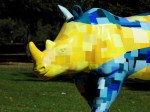
In the past three photo-blog posts (linked above), I’ve had a marvellously merry time tracking down the Go Rhinos! sculptures that make up the Southampton Rhino Trail. As part of the Rhinotastic! event at Marwell Wildlife, all 97 sculptures (36 full-sized sculptures and 51 school-sized) are re-united at the Secret Garden behind Marwell Hall between 10th and 14th of October. Yesterday, I was lucky enough to go visit Marwell and catch up with my most favourite rhino, along with the few that I hadn’t managed to meet quite yet.

Despite the rain showers later in the day, an awesome time was had and I managed to sneak in a few photographs in between the raindrops; representing the very final results of my summer-long rhino-snapping efforts. Enjoy!

[Zinar7]

Tagged , , , , , , , , , ,

PhD Fraud #14: Launch Procedure Initiated

PhD14

On the 1st of October, 2013, I officially entered my FIFTH year of PhD studies, and technically my NINTH year of University as whole. What once seemed like a carefree jaunt into the unknown to study the engineering of aircraft and spacecraft has almost turned into a proper career, and I’ve survived eight whole years of MEng thru MPhil/PhD study to be where I am today.

Very soon, I will be finally giving man-birth to my own weighty tome, polishing off the rough edges of The Thesis and  finally palming the damned thing off on someone else. I’ve been working on my thesis document for the best part of twelve months now (although I had been writing less formally for it before that) while part-time working on my PhD research and working on other research the rest of the time. As we speak, I’m still firmly entangled in the throes of writing The Thesis, but things are finally starting to coalesce into something concrete: I still feel like I’m a long, long way off from having something that I’m happy with (and heck, there’s no guarantee that I’d ever get there in a million years anyway), but I’ve got to hand something solid in within the next couple of months, so my nose is very firmly pressed to the grindstone.

I should probably be writing this instead of penning blog entries. Oh well.

I should probably be writing this instead of penning blog entries. Oh well.

About the same time that I’ll hand in The Thesis, I’m also due to finish work on the couple of post-doc projects that have helped support my through this final year of writing-up (technically I’m a ‘post-doctoral research assistant’, but I kind of still haven’t gotten the ‘doctor’ bit yet so I feel kind of bad telling people I’m a post-doc. Doesn’t stop me, though). Since October last year, I’ve worked full(ish)-time on two EU-funded projects on space debris (the ACCORD and ReVuS projects) whilst trying to fit my PhD work and writing of crying about The Thesis into the time surrounding that. Where my PhD stuff has focussed on looking at the ocean from space by using imaging radar on spacecraft, my primary research now revolves around understanding the risks of space debris to those same satellites, and figuring out how satellite manufacturers and operators can be encouraged to comply with international guidelines that are in place to avoid a considerable rise in space debris population and hence risk to orbital satellites. In a couple of weeks, I’ll be attending a space debris conference at ESA Harwell, meanwhile back in July we exhibited at the UK Space Conference (and here you can find my review/summary of our time there): at both events, I spoke (or will talk) about my work on the ACCORD project and our progress so far in quantifying the effects of mitigation on the debris environment and communicating this to space industry. There’s been quite a good reaction from both industry and the space debris community about our work, and the result is a new ‘environmental impact rating’ for spacecraft based on their consequences for the space debris environment.

Unlike writing The Thesis, I really enjoy some of the space debris work I’m involved in, and it’s far, far more interesting than any of my PhD work has been. It’s certainly been an entertaining distraction from the misery of The Thesis, and I’ve been getting paid for doing it as well as been on a few nice trips abroad, so I guess that should be considered a Victory. It’s often quite a surprise to find myself genuinely engaged and passionate about research again: it’s definitely a good feeling to be ‘fired up’ about science and engineering, given that my PhD has long since descended into an uninspiring trudge. Sometimes, that spare enthusiasm spills over into my Thesis, and I actually get something done for a change, which can only be a good thing. The Thesis (v2.something) is almost ready to have the final few chapters sent to my supervisor for final comments, and it’s almost looking like a ‘proper’ piece of work now. Almost.

Sounds about right.
(Calvin & Hobbes, 31st October 1989)

I mean, “writing up”: how hard can it be? You just string a few words and sentences together, add a few graphs and diagrams that support your argument and reference all the important literature such that you have a cohesive combination of introduction, argument and discussion with which to defend your novel contribution to the research field. Piece o’ cake, right?

To some, writing comes naturally; to others, it’s more of a struggle. I actually consider myself to be a fairly good writer (although I can descend into ‘waffle’ like a pro), but it’s more through practice and perseverance than any natural talent; my usual technique to just keep spouting words onto a page and then, over a lengthy series of drafts and re-drafts, whittle that down to some pro content. I like to call this the ‘Keep Chucking Words at the Page and Eventually Some of them Might Not be Terrible’ technique. It seems to work, though, and I’ve ascended (somewhat reluctantly) to being the default writer-upper-person in our little group of grad students; enough such that I’ve rather ominously been given the nickname of a certain 18th-Century poet who dabbled in daffodils, among other things. My four-year jaunt into academic/scientific research has at least taught me a few of the tricks of scientific writing; I recently came across this chart from RecycleXP, which humourously recounts some of the prominent tropes in academic writing, and inspired both amusement at how ‘true’ it is but also quite a bit of cringing regarding how much I’ve used each one in The Thesis:

In many ways, the worst part about writing a major document is the people around you. People ask questions like: “So how much of your thesis have you written?” and “When are you going to hand in?” and “Why does your face look weird?”, which are rarely helpful and to which I usually respond with: “Argh! I don’t know! Soon? Maybe?” <*crying*>

As with all research, it’s possible to keep finding more things you’d like to do, and there’s always more data to look at and more stuff to write. I could probably keep looking at The Thesis until the end of forever and find things I’m not happy with, but I guess at some point everyone kind of has to take the plunge and submit the damned thing regardless of how close/far away it is to perfection. For me, that point appears to be approaching at increasing speed, and I’m desperately trying to tie up loose ends and polish off the ‘rougher’ bits of it and plug the most ‘obvious’ gaps in my argument. At some point though, you just have to find a place to put down your pen/typewriter/word processor <delete as applicable> and stop writing.

With that, I shall take my own advice and board the train back to Thesis-land, where I’m informed that we will be stopping at Boredom, Misery and Confusion along the way. All aboard the failroad!

[Zinar7]

Tagged , , , ,

Rhino-Hunting: Part 3

Rhino_3

Head over here to find Rhino-Hunting Part One // Rhino-Hunting Part Two // Rhino-Hunting Part Three // Rhino-Hunting Part Four

Over various weekends throughout the Summer, I’ve taken immense joy in taking a closer look at my hometown and hunting down all of the Go Rhinos! sculptures that make up the Southampton Rhino Trail. After ten weeks of inhabiting the pavements and parks of Southampton, the rhino are biding their time before the ‘Rhinotastic!’ event at Marwell Wildlife between 10-14th October. I’ll certainly miss their friendly faces dotted around town, but aim to catch up with them all again at Marwell in a week or so’s time.

Anyway, in accordance with my previous couple of photo-blogs on the matter, a few weekends ago I once again trotted into Southampton city centre – camera in hand – to photograph the major sights and sounds of this vibrant city. Here are a few more of my snaps from my excursions:

[Zinar7]

Tagged , , , , , , , , , ,

PhD Fraud #13: The Doctor Dilemma

PhD_13

Given that I’m soon to be submitting The Thesis for critical review and that it’s very possible that, in less than three months’ time, I could technically be a Doctor, it’s time to properly think about the implications of completing the PhD process and entering the world as a proper Doctor of Philosophy.

Should I pass the viva examination, one of the first big decisions will be: what the hell do I call myself? After four years of hard work and much perspiration and  consternation, I will officially be allowed to call myself ‘Dr. George’. In itself, that’s a terrifying thought, but is it what I want?  Much as this series of blog posts has been titled “PhD Fraud“, the feeling that ‘it’s all been some big mistake and the examiners have accidentally awarded me a doctorate by mistake’ is not likely to go away; I will probably still continue to feel like a bit of a fraud and that I don’t deserve such accolades. I’ll therefore feel immensely awkward as introducing myself as ‘Dr. George’ rather than just a simple ‘Mr.’, and anyway ‘George’ isn’t a surname that suits much of the ‘Doctor’ prefix: I’ll just sound like I’m local GP or something, whereas I have only a rudimentary knowledge of medicine and certainly wouldn’t be any use if a passenger’s head just exploded on a passenger plane. No, if I’m going to keep the title of ‘Doctor’, the least I can do is to have a surname that’s worthy of using the prefix, and the only logical answer is ‘Thundersmash’.

All Joking aside, while I’m not going to be rushing out  to properly change my name straight after my viva, I’m certainly considering how I’m going to approach introducing myself to new people. Already, I kind of feel awkward talking about my research with anyone (not even other grad students), let alone with the general public who perhaps aren’t as aware of ins-and-outs of academia. I’m generally a pretty quiet and humble sort of chap who doesn’t like to blow his own trumpet, so tend to end up acting pretty bashful when non-academic friends/people ask what my research is about (and, usually, find it a heap more interesting than the reality actually is).

When I talk to my friends outside of academia, I kind of feel like I’m not much of a success: my best friend works for a Formula 1 team, whilst the other does media/filming stuff and so gets to go to swanky things like major film premieres and whatnot. Meanwhile, I’m stuck in the same office every day, staring at the same bits of MATLAB code and faffing around with the same Word document (The Thesis). It’s sometimes difficult to visualise what effect your research has on the world at large – often, research is so incremental and focussed that it can be difficult to make a connection to the real world, or value its relevance; certainly not in the same way that a doctor, firefighter or even coffee shop barista can measure what they’ve done for other people. So yeah, sometimes I end up feeling a little unimportant when I’m striving away at research at the same desk day in, day out, and so perhaps getting a few letters either before or after your name helps to reinforce the ‘value’ of your research efforts.

Despite all this, cruising around thinking of myself as ‘Dr. George’ – or even just being known as ‘that Doctor guy’ – is still going to feel intensely strange; I’d rather people just call me by my first name than have to get all tangled up in surnames and honorifics. Staying in academia following graduation implies that one must call oneself ‘Doctor’, since it effectively describes ‘rank’ on the academic ladder. Away from academia though, and the necessity to retain the new prefix is far from critical, and likely comes down to personal choice: for me, maybe I’ll add a ‘Ph.D’ suffix after my name on business cards or CVs just to make myself sound more important than I really am, but I’m certainly not going to come across all Alan Sir Sugar Lord if you don’t use the correct title.

Thundersmash Business Card

Anyway, how close am I to finishing? Well, not too far off (I hope). Last month, I submitted a 95% complete draft to my supervisor, which was returned with some helpful comments. I’m currently bouncing around trying to add the final 5% of work and tidy up everything that was there before. I’ve just negotiated to have my thesis deadline extending by a couple of months in some recompense for the year or so I’ve been doing other (unrelated) research, such that I can submit final copy somewhere in November/December. I’m certainly intending to get final draft to my supervisor by the end of October, which should provide sufficient turnaround to address comments and feedback before I commit to submission.

I’ve heard from various people that this part of the ‘write-up’ process is the hardest, and I can’t argue with that sentiment: it’s the most nerve-wracking, as you desperately try to wrangle the more slippery parts of The Thesis into some sort of shape, but also the most frustrating since you’re so, so close yet you can’t cross the finish line quite yet. There’s also a continuing frustration that you’ll never get it into a perfect state that you’re completely completely happy with, and at some point you just have to push it out of the door and hope that it’s ‘good enough’. I’m nearly at the point where it’s going to have to be pushed out of the door regardless of my satisfaction with it, and that inspires both terror and relief in almost equal measure. In many ways, I know I’m so, so close to the end, but things still feel a way off yet. Nearly there!

[Zinar7]
Tagged , , , , , ,

My Life in Music: B-Sides

Bsides Following last week’s blog posts about the best albums from ever year I have been alive, this (final) post acts as a quick round-up of what has gone before and a short summary of other records that (ideally) would have been on the list as well. As a recap, my previous blogs in this series can be found here:

Part 1: From Out of Nowhere (1985-1991)
Part 2: Where Boys Fear to Tread (1992-1998)
Part 3: Dancing Through Sunday (1999-2005)
Part 4: Set Fire to the Hive (2006-2012)

Since I could only choose one entry per year, it wasn’t possible to include every of my favourite albums in this series; as a result, some of the finest musical works have not been represented here. In an attempt to redress the balance, here are a supplementary seven records that lost out (maybe because of very competitive years) that should not be overlooked. Here we go!

Dream Theater – Images and Words (1992)

1992

Despite losing out (just) to the mind-blowing Angel Dust for the 1992 crown, it shouldn’t be underestimated what a landmark record Images and Words is in modern progressive rock/metal. There’s a killer amount of depth to the sophomore album that brought the band to the attention of the masses, and it still remains a stone-cold classic that kicks off with perhaps the defining Dream Theater compositions; the enthralling ‘Pull Me Under’. Where their first release (1989’s Where Day and Dream Unite) was a competent and promising debut, their potential is fully realised on this, their follow-up, which reaps the benefits of greater musical gestation along with the addition of James LaBrie’s vocal talents. Images and Words, then, covers a broad spectrum of DT’s vein of prog-metal, hitting hard on the likes of ‘Take the Time’ whilst remaining delicate and light on slow, atmospheric peaks like the swirling ‘Wait for Sleep’ and the crossover with the deeply progressive ‘Learning to Live’.  Dream Theater would later rack up more classic albums (2005’s delightful Octavarium, in particular), but Images and Words will ever be the epitaph that will grace DT’s tombstone when they finally hang up their instruments; something we should all hope they don’t do for a good while yet.

Song Choice: [Pull Me Under]

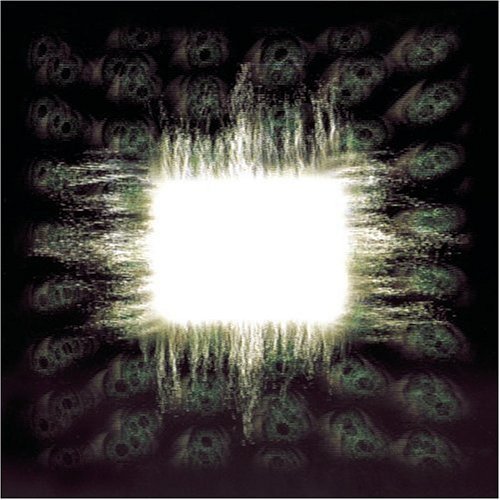
Tool – Lateralus (2001)

tool_-_lateralus

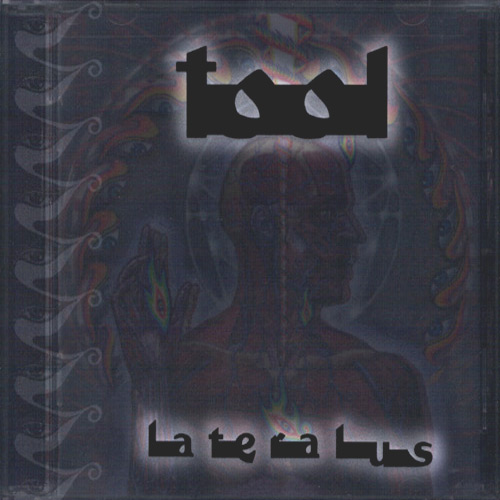
As will become clear over the next few entries, choosing a winner for 2001 brought on more heartache than for any other year; even though Daft Punk’s Discovery deserves nothing less the God-like status, it did mean that near-perfect albums like Lateralus had to be left out. More accessible than Ænima and less meandering than 10,000 Days, the science of intelligent, progressive metal is well and truly mastered on Lateralus. Home to swirling melodies, mathematical time signatures and unsettling noises, Tool’s output always sits closer to ‘art’ than ‘music’; something that Lateralus‘ beautiful packaging and artwork do little to dispel. More important is the mathematical detail; the whole album subject to numerical concepts and support to an overarching Fibonacci sequence portrayed in musical form (seriously, look it up). More so than any of Tool’s other work, Lateralus is perhaps the most elusive; feeling sometimes like a soaring eagle rather than a metal behemoth. It also captures time in such a way that each successive listen will bring back to the first time you played it, with the full force of art and music in perfect harmony. Lateralus will never be bettered, but then again, the pinnacles of a whole genre rarely are.

Song Choice: [Lateralus]

Weezer – Weezer [the Green Album] (2001)

GreenAlbum

After a somewhat lukewarm reception to their (undoudtedly superb) sophomore album Pinkerton, Weezer went into hiding for five long, wilderness years before dropping their follow-up with very little announcement and only minor fanfare. Taking the opportunity to reboot themselves, Weezer brought forth another self-titled output (lovingly nicknamed by fans as the ‘Green Album’) that recalls much of the powerpop/rock from their debut Weezer (the ‘Blue Album’) and contrast with the darker tone(s) on Pinkerton. Clocking in at just shy of thirty minutes in length, the Green Album blisters through ten catchy, simple songs that define the classic Weezer powerpop formula; Rivers Cuomo’s faultless writing and melodies latching onto the brain’s nervous system and never really letting go. The rejuvenated band would later release the equally superb Maladroit scarcely a year later, on the back of critical and artistic success. That being so, the Green Album remains a landmark entry in Weezer’s (now-) prolific output and, twelve years on, still utterly essential. The Blue Album may be the universal classic that will be remembered for decades, but The Green Album is my nominee; completely encapsulating a time and place in my life that may never be bettered.

Song Choice: [Hash Pipe]

Andrew W.K. – I Get Wet (2001)

I_Get_Wet

What is there to say about this record that can’t be gleaned from the cover image alone? This a party record; designed solely to (sonically) destroy your face and to make you party hardier than is humanly possible. From beginning to end, this is 100% solid balls-to-the-wall rock and roll, and unashamedly so. Wearing its motives on its sleeve with pride and power, I Get Wet is pure, unadulterated fun, condensed into twelve, 3-minute pop songs with overdriven guitars, keyboard and drums beaten at a breakneck pace. A more un-pretentious, entertaining statement-of-intent you will not find. Here, Doctor Andrew finds the formula for PARTY, distils it into musical form, and prescribes doses to be taken (at least) twice a day to the aural senses. The haters may hate, but find me a (true) music fan that doesn’t adore AWK’s simple message for partying hard and I’ll eat my own head.

Song Choice: [Party Hard]

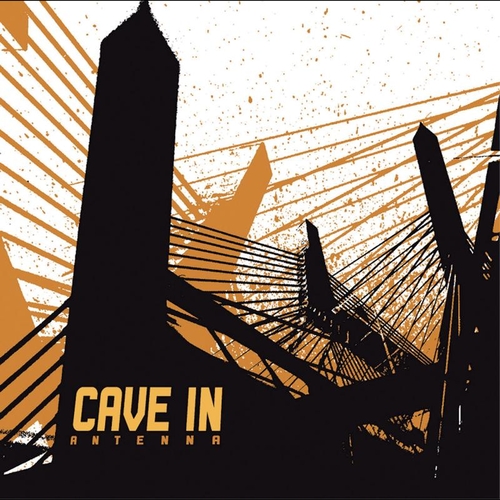
Cave In – Antenna (2003)

Antenna

In the extensive Cave In back catalogue, Antenna feels like both an anomaly and a delight. The 2003 album was critically applaud upon its release (indeed, the likes of Kerrang! poured bountiful plaudits over it for many months, nay years), but it marked an evolutionary change in sound from its predecessor, Jupiter,  and a more harmonious appearance than its successor, Perfect Pitch Black; both of which contain lyrics, compositions and screams much harder than anything that can be found here. While Cave In themselves found much to dislike on Antenna, the rest of us can plunder from its pulsating, emotive alt-rock and revel in its handling of raw themes drifting in and out of infectious musical refrain. It’s the least abrasive entry in the Cave In library, and as such feels far more cutting than some of their more post-hardcore or metalcore releases; which, in their roughness, often lose connection in therefore their primary source of power. The endurance of Antenna comes from the passion and prowess contained within its dozen tracks, and is likely display further longevity for many years to come.

Song Choice [Inspire]

Justice – † [Cross] (2007)

Justice

Much like another certain French electro-house duo, Justice are the master conductors of the kind of grandiose EDM soundscapes that were always destined to be played to gigantic crowds to great acclaim. Despite two subsequent live albums and another studio release, 2007’s masterwork, † (Cross), remains their enduring studio recording, and one that’s home to a million samples/electronic compositions lifted from the breadth of pop, rock and electronica. From the opening track (aptly-titled ‘Genesis’), it’s clear that Justice mean business – where Daft Punk were always about art and music in equal measure (those helmets and the Instella 5555 movie withstanding), Justice are 100% about the music. The first thing that’s noticeable is the relative lack of voice: the majority of Cross is instrumental, feeling like some sort of lumbering, electro-mechanical machine and the inner-workings on this are most clear on grinding, chugging monsters like ‘Stress’; regardless, the likes of ‘D.A.N.C.E.’ and ‘DVNO’ demonstrate that Justice know intimately how best to fill a dancefloor. In spite of all this, however, the only place to properly experience Justice is in the live setting, and their arena spectacular is truly a joy to behold; one that I encourage everyone to seek out.

Song Choice: [Genesis]

Ke$ha – Animal/Cannibal (2010)

AnimalCannibal

For many people, it’ll probably be a bit of a shock to see something like Ke$ha on this list; those that truly know me, though, will not be surprised (although they may still be slightly appalled). In many ways, this is the sister album to Andrew WK’s staggering I Get Wet (which only just missed out on the 2001 award and which will be reviewed in the upcoming ‘B-Sides’ post); the absolute embodiment of party. Regardless of what you think of her, Ke$ha has some mighty catchy songs (although a minor inability to spell things correctly): ‘Tik Tok’. ‘We R Who We R’ and ‘Your Love is My Drug’ and but a few. The sneerers may sneer and the haters may hate, but music was invented to be fun, and not everything has to push the boundaries of musicianship or art: sometimes you just need to kick off your shoes, shuffle over to the dancefloor and go crazy. We were born to break the doors down; fight until the end. #Warrior

Song Choice: [Your Love is My Drug]

Divider

[ Final Words ]

There we are, so that’s it: thirty-five of my most precious albums ever ever; all rounded up and brought together into the world’s most giant mixtape. It’s been fun: the process has certainly given me ample opportunity to re-assess a few albums I’d previously dismissed, and see them in a different light.

It’s certainly interesting that the most difficulty I had (with choosing a winner for each year) came for 2001-2004; arguably my formative years for getting into rock and metal. It’s not necessarily that these years held ‘better’ music than any of the others (although Daft Punk’s Discovery is and will always be the greatest musical achievement of humanity), but that my emotional connection to them is strongest.  Perhaps my rather scattershot rock/metal music tastes have been justifiably represented in this list – certainly my tastes have gotten a whole lot more eclectic in the last few years; perhaps that’s a sign that I’m getting old. My passion for music doesn’t seem to be abating any, though: I still consume a truckload of music, as my Last.FM profile will attest to. I have no idea what the next seven years may hold in store; whether the choice albums from those years will be ones by bands already covered in this list, or populated by a whole raft of new artists.  We can but wait and see.

But like any good Oscars speech, there are a heckload of other contenders that I’d like to address, and thank for the joy they’ve brought and the passion that they’ve inspired: here’s an attempt to do justice to the many other albums that have graced my ears again and again and again, and that remain very dear to me. I’ll stream them as a big list here, as footnote to to those I’ve already covered in more detail. Thanks everyone; you’re the best.

Pearl Jam – Ten (1991)
Soundgarden – Superunknown (1994)
Machine Head – Burn My Eyes (1994)
Green Day – Nimrod (1997)
Air – Moon Safari (1998)
Nine Inch Nails – The Fragile (1998)
AFI – Black Sails in the Sunset (1999)
Slipknot – Slipknot (1999)
Jimmy Eat World – Clarity (1999)
American Hi-Fi – American Hi-Fi (2001)
Rival Schools – United by Fate (2001)
Alkaline Trio – From Here to Infirmary (2001)
Jimmy Eat World – Bleed American (2001)
Queens of the Stone Age – Songs for the Deaf (2002)
Funeral For a Friend – Casually Dressed and Deep in Conversation (2003)
The Ataris – So Long, Astoria (2003)
Brand New – Deja Entendu (2003)
Jimmy Eat World – Futures (2004)
Hayseed Dixie – Let There be Rockgrass (2004)
The Explosion – Black Tape (2004)
Power Quest – Neverworld (2004)
My Chemical Romance – Three Cheers for Sweet Revenge (2004)
Still Remains – Of Love and Lunacy (2005)
Nine Inch Nails – With Teeth (2005)
Dream Theater – Octavarium (2005)
Funeral For a Friend – Tales Don’t Tell Themselves (2007)
Owl City – Ocean Eyes (2009)
The XX – The XX (2009)
Ensiferum – From Afar (2009)

[Zinar7]

{ coming soon: My Life in Games and My Life in Movies }

Tagged , , , , , , , ,

My Life in Music IV: Set Fire to the Hive

Music_4

Continuing on from where we left off yesterday (link), here’s the fourth and final part of my quest to examine and document my favourite full-length records from each year that I have been alive. This post covers 2006 to the present, demonstrating an even greater diversity in my listenings and revealing trends for the future and (perhaps) what I’ll be listening for the next seven years. Next week, I’ll round up those albums that couldn’t quite make the cut, but still deserve to be on the list.

Doing this series has been a pleasure and a joy; allowing me to re-review a lot of my favourite albums, and to provide opportunity to put my stamp on what defines me, at least musically. There’ve been no huge, gargantuan, revelations along the way, but the process has re-affirmed some of my most dearest records and given some of the other a new ‘ear’ and re-discover them after a long time.

This isn’t the last post, though, as I’ll be providing a quick run-down in the next post about some of the albums that didn’t make the cut; usually because they were in a competitive year and I could only choose one. In the meantime, I hope you’ve enjoyed this little amble down musical memory lane and without further ado, here’s the rest of it:

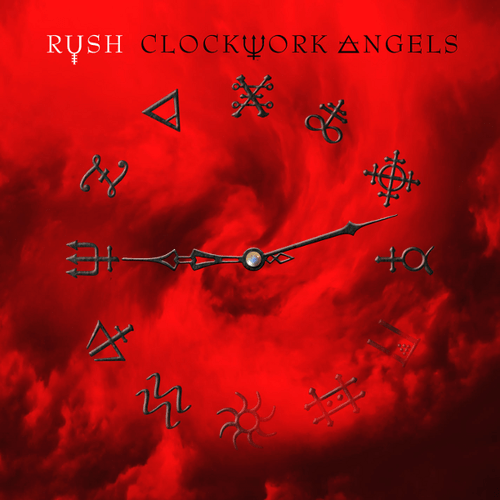
2012: Rush – Clockwork Angels

Clockwork+Angels

Since the release of Rush’s 2007 cracker Snakes and Arrows, the enduring Canadian prog-rockers have ridden a wave of resurgence which is (arguably) the highest they’ve seen since their 1970s/80s heyday. It’s with fine reason though, since their consistently superb live shows have been supported by albums that show some serious form – Clockwork Angels pulls together some of Rush’s finest songwriting, conceptual imagery and lyrics since 1981’s Moving Pictures. ‘Caravan’ opens proceedings with a barrage of distorted guitars and by the time that second track ‘BU2B’ kicks in, it’s clear that Clockwork Angels is possibly Rush’s heaviest album to date; at least sonically. Evoking ideas of time travel, alchemy and anarchy, Neil Peart’s top-score lyrics deliver a compelling story through the likes of ‘The Anarchist’ and the stonking ‘Headlong Flight’; both of which must surely become setlist regulars from now on. Overall, it’s a barnstorming lesson in modern progressive rock, drawing inspiration from the band’s forty-year career and with that proviso, remains utterly, utterly essential.

Song Choice: [Caravan]

2011: Rhapsody of Fire – From Chaos to Eternity

From+Chaos+To+Eternity+cover

In an ideal world, From Chaos to Eternity would win the 2011 award based on its superb cover art alone, but we’re here to judge the music, not the cover art (though that gives me an idea for a future blog series…) and on that basis, there’s plenty to love here. Where the previous year saw Rhapsody release a returning masterpiece that recalled some of their best work, From Chaos to Eternity raises the bar yet further for orchestral power metal; injecting even more heavy metal riffs into the Rhapsody cauldron and cooking up an even darker tone, albeit with no compromise on epic symphony. The titular song that opens proceedings is infectious and tempestuous, whilst the likes of ‘Tempesta di Fuoco’, ‘Ghosts of Forgotten Worlds’, ‘Aeons of Raging Darkness’ and ‘I Belong to the Stars’ are heavenly slices of symphonic power-metal, capturing some of their best material since, well, ever. This would, unfortunately, be the final album that the power trio of Alex Staropoli, Luca Turilli and Fabio Lione would make together; instead deciding to amicably split into two Rhapsody-canon bands: Rhapsody of Fire (Staropoli, Lione) and Luca Turilli’s Rhapsody (Turilli). If it means that we now get twice as much Rhapsody as before and if it’s anything like their output in the last few years, I’m all for it.

Song Choice: [From Chaos to Eternity]

2010: Rhapsody of Fire – The Frozen Tears of Angels

266842

I felt slightly guilty putting two Rhapsody albums for consecutive years, but when the prolific Italians insist on releasing two stellar 60-minute albums and a killer 35-minute EP in the space of fourteen months, what’s a guy to do? After a brief hiatus following 2007’s lukewarm Triumph or Agony, Rhapsody took time off to adjust their view; the time off allowing them space to derive more lore, lyrics and lilts and for the continuing ‘Dark Secret’ saga (which was last touched on in 2004’s Symphony of Enchanted Lands II and which took my award for that year). The result is a powerstorm of ideas, themes and expressions spouting from the orchestral nerve centre that is the combined Alex Staropoli/Luca Turilli hive-mind:  ‘Sea of Fate’ is classic Rhapsody, full of vim, vigor and galloping, exploratory guitar/key solos; ‘Raging Starfire’ lives up to its monicker, delivering a clash of symphonic, charging riffs and orchestral tones; whilst the eponymous final track is some of the darkest Rhapsody that exists in the canon, but equally some of the most essential; rounding off a blinding return to form.

Song Choice: [Sea of Fate]

2009: Karnivool – Sound Awake

Sound+Awake+PNG

I was first exposed to the Australian five-piece when they played support to Skindred on their 2009 autumn tour; I was instantly blown away. Even as a mere support act they oozed class, but they’re also a band capable of delivering a live show that’s so tight and note-perfect (even when delivering their multi-layered, progressive rock/metal), and with a quality and professionalism rarely seen in a band so ahead of their years. Their debut record, Themata expresses their hallmark sound with a raw, undeveloped energy, but it’s on their sophomore, Sound Awake that you hear a band in total harmony, and delivering a noise-scape of dream-like quality that’s been delicately crafted and refined. The result is staggering, monumental slab of unpigeonholable sound, and an album that instantly latches onto your synapses and merely gets better and better. You may not have heard of them, but I highly, highly recommend you seek out Karnivool while they’re still (relatively) undiscovered by the masses.

Song Choice: [Simple Boy]

2008: Less Than Jake – GNV FLA

GNVFLA

Twenty years into their punk career, the fact that LTJ can still produce bodies of work of GNV FLA‘s quality is testament to the band’s monumental talent and presence in the ska-punk scene. The follow-up to 2007’s disappointing In with the Out Crowd feels like the work of a band reinvigorated, finding their direction once again – the ska is back, the horns are turned way up, and the likes of ‘Does the Lion City Still Roar?’ absolutely commits to everything that makes LTJ one of the very finest live and touring bands in the genre. Perhaps the inspiration for this return to form lies in their hometown of Gainesville, Florida (providing the title of the record), resulting in a re-discovery of ideas, values and sounds. Whatever the cure, the solution is a sight (and sound) for all to see, and an accomplishment equal to the stunning Hello Rockview exactly a decade previous.

Song Choice: [Does the Lion City Still Roar?]

2007: Turisas – The Varangian Way

Turisas-VarangianWay

After inventing a whole genre with their stonking 2004 debut Battle Metal, their sophomore record represents Turisas’ first fully-conceptual album, telling the story of Scandinavian (Varangian, in Greek and Slavish) warrior longship expedition to join the Byzantine Varangian Guard. The story begins in Holmgard (Novgorod, in modern-day Russia) near the Baltic Sea in ‘Holmgard and Beyond’, passing through Kiev and down the Dniepr river in ‘The Dnieper Rapids’, before arriving in Constantinople in ‘Miklagard Overture’. The battlers’ fable is told with the usual Turisas power and ferocity; boiling down the tale into 8 folk-/power-metal songs infused with Viking spirit and atmosphere. Their folk-metal cover of Boney M’s ‘Rasputin’ (included here as a bonus track) may be their most famous output, but Turisas are most formidable when given free rein to create stories of their own.

Song Choice: [To Holmgard and Beyond]

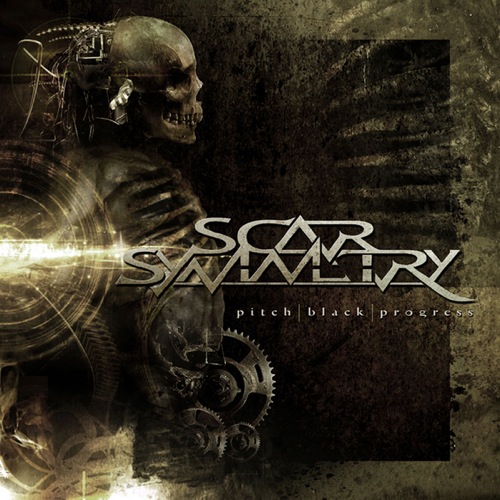
2006: Scar Symmetry – Pitch Black Progress

Pitch Black Progress

Of all the music-years that I’ve compiled in this list, I think 2006 was the most difficult purely because I couldn’t think of anything that really fit the bill. Sure, there were some great releases (Foo Fighters’ Skin and Bones, Iron Maiden’s AMOLADKillswitch Engage’s When Daylight Dies, Tool’s 10,000 Days), but nothing quite hit me square in the heart; the effect being that 2006 was the last year I committed to, and written at the very last minute. Pitch Black Progress is a strange choice, then, but not quite one chosen in the heat-of-the-moment. It’s a defiant release by the least well-known band on my list; a splatterhouse of metalcore, melodic death metal and prog-metal; melted down to their constituent parts and revealing gold in a warped form of mechanicalchemy. It’s a chaos of gutteral-/melodic-vocals, crushing guitars and ferocious percussion, but there’s order in the disorder and it’s an undeniably accessible body of work, revealing new facets with time. A kaleidoscope of Scandinavian metal, then, but assuredly a stout fit for this compliation.

Song Choice: [The Illusionist]

[Zinar7]
Tagged , , , , , ,

My Life in Music III: Dancing Through Sunday

Music_3

Continuing from yesterday’s post (link), here’s the third part of my quest to examine and document my favourite full-length records from each year that I have been alive. This post covers my third seven years: 1999-2005, in which I flip-flop between goth-punk, post-hardcore, epic symphonic power metal and electro-house. Tomorrow will mark my final post of this series, checking off the last seven years to date, and covering everything up to 2012.

But without me waffling on for even longer, let’s get this done:

2005: Thrice – Vheissu

Vheissu

Thrice have always been a mighty band, but none more so than on Vheissu: where 2003’s The Artist in the Ambulance hit the post-hardcore chord square in the face, the follow-up attempts something far more ambitious. There’s a far more melodic tack on Vheissu than Thrice display previously, but that’s not to say that there’s any lack of power on show: ‘Between the End and Where We Lie’ is just as hard-hitting as anything else the band have delivered.  The band draw inspiration from other sounds, and sciences, that diversify the soundscape; embracing touches of electronic and instrumental sounds to accent Thrice’s raw, honed, sludgy post-hardcore. There are more progressive elements as well, and sounds that only permeate into the brain upon numerous listens before they really take hold. Where The Artist in the Ambulance felt like the work of a band of supreme competence but perhaps not confidence, Vheissu is the product of a group who’re confident to branch out and hollow out a niche of individuality in a sea of imitators and luminaries. It pays off supremely, conluding with the authoritative ‘Stand and Feel Your Worth’ and the haunting ‘Red Sky’, drawing the curtain on a true classic.

Song Choice: [Image of the Invisible]

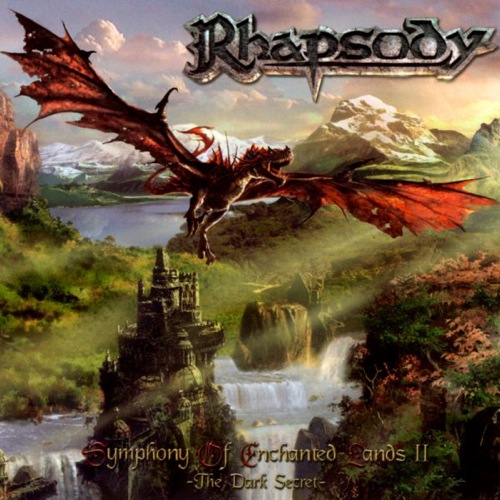
2004: Rhapsody – Symphony of Enchanted Lands, Part II

Rhapsody - Symphony of Enchanted Lands II

Symphonic/power metal hasn’t had a strong showing on this list, despite the significant amount of it that I seem to funnel into my ears; well, here’s changing that. The mighty Italians’ 2004 opus delivers another slab of their Tolkien-flavoured fantasy ‘Hollywood’ metal; once again expertly mixing their trademark bombastic, symphonic landscape of orchestral metal with Fabio Lione’s soaring vocals. Aside from the gripping musical backdrop, the real innovation is the pitch-perfect narration from Christopher Lee; now a knight of the realm and a firm fixture in the Rhapsody/Rhapsody of Fire/Luca Turilli’s Rhapsody canon. Rhapsody’s brand of epic, orchestral, symphonic metal sure as hell ain’t subtle (there’s genre-standard songs about dragons, mages and orc-slayers a-plenty), but it’s performed with a superlative level of bombast that must rival some of the best contemporary songwriting and mucisianship which are present in the field. Alongide its 1998 predecessor, Symphonic of Enchanted Lands II remains a peak in the elegant Rhapsody back-catalogue, and (undoubtedly) the background noise for a million D20 rolls.

Song Choice: [Unholy Warcry]

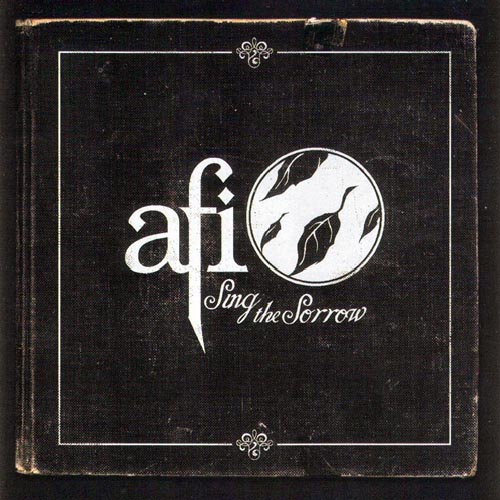
2003: AFI – Sing the Sorrow

2001

First things first, let’s get some things straight: Sing the Sorrow is my favourite album ever ever ever. It’s unlikely that any other record will have such a special place in my heart nor surpass it from my thinking that it is utterly, unashamedly perfect in every single way. I don’t think it’s the greatest album ever made (Discovery, discussed below, must surely take that accolade), but its extraordinary connection with both my ears and my heart mean that, to me, it is the greatest musical achievement in mankind’s history. It’s also proof of the ever-evolving AFI sound; ditching the goth-hardcore-punk from The Art of Drowning and encompassing a whole raft of new musical ideas and themes. The fact that it’s also a well-veiled concept album about life, death and rebirth (complete with the still-unsolved Clandestine/337 mystery) mean that there’s a remarkable depth to this record that, a decade on, still has only scratched the surface. I will never tired of this album; radiate, recognise one silent call as well all form one dark flame.

Song Choice: [Girl’s Not Grey]

2002: Finch – What It Is To Burn

WhatBurn

Sadly, Finch’s lifetime as band was too short-lived; disbanding in 2006 before they really had time to get into their stride. What it is to Burn remains a prime slab of the early-noughties explosion of top-score post-hardcore (rhyming semi-intentional) that hasn’t withered an inch in time. It remains true to its hardcore roots, with plenty of crushing guitars, slamming drums and melodically-screamed lyrics pouring out emotion before the scene was diluted and curtained by aesthetic and hairstyles. ‘Letters to You’ sticks out as a classic, but the true glories lie in the more experimental excursions from the genre stock: the aptly-titled ‘Project Mayhem’ is a vision of organised chaos featuring Daryl Palumbo of Glassjaw, whilst the progressive, swirling ‘Ender’ and ‘What It Is to Burn’ conclude a record that draws inspiration from many sources but which is adapted into a definitive Finch noise-scape. The follow-up, 2005’s Say Hello to Sunshine would dilute the composition, but What It Is to Burn remains a staunch reminder of the band’s post-hardcore talents.

Song Choice: [Letters to You]

2001: Daft Punk – Discovery

Discovery++PNG

As I alluded to in the mini-review of Sing the Sorrow, I genuinely think that Daft Punk’s masterpiece, Discovery, is the greatest musical achievement of this century, if not ever. Of course, being a super-nerd for everything The Robots put out makes me more than a little biased, but from the opening notes of ‘One More Time’, there’s no denying the album’s influence on the whole genre of Electronic Dance Music; repercussions can be felt further afield, too. With the rise of The Robots reaching higher peaks with the glorious Random Access Memories in 2013, there’s been a resurgence in disco-tinged electro/pop, the roots of which can be found here. Discovery‘s first few tracks are a lesson in how to put together a genuinely-staggering streak of  brilliance: from the sublime opening of ‘One More Time’, through ‘Aerodynamic’, ‘Digital Love’ and ‘Harder Better Faster Stronger’, that’s almost a ‘Best Of’ Daft Punk right there. The rest of the record doesn’t disappoint, and concludes with the ten-minute epic ‘Too Long’ which recalls much of their 1996 debut, Homework, reminding just about everyone why Daft Punk are the best people in the business.

Song Choice: [Digital Love]

2000: AFI – The Art of Drowning

ArtDrowning

To their credit, AFI have always pushed the boundaries and their musical talents; aside from their early hardcore/punk releases, no two AFI albums sound the same. Where its predecessor Black Sails in the Sunset added increasingly dark & gothic influences to their punk stylings, The Art of Drowning relinquishes yet more hardcore tones and adds a Tim Burton-esque atmosphere to proceedings. In addition to those presented on Alan Forbes’ exquisite cover art, dark themes permeate through waspish tracks like ‘Sacrifice Theory’, ‘A Story at Three’ and well-chosen single ‘The Days of the Phoenix’, and AFI finally tame the goth-punk, Misfits-esque beast that they’d been wrestling  with for the past two albums. The band also reached a career-peak in the wolfish howls and “wo-oah”s that ventilate the band’s fast-paced backing and the result is a perfectly-refined and well-honed goth-punk record; streamlined, crafted and perfected to the delight of the band’s older fans. As ever, we remain, in shadows; growing wings.

Song Choice: [Days of the Phoenix]

1999: The Ataris – Blue Skies, Broken Hearts…Next 12 Exits

The_Ataris_-_Blue_Skies,_Broken_Hearts...Next_12_Exits

If there was ever to be a punk soundtrack to break-ups and heartache, then there’s a fair chance that it would be entirely filled with songs by The Ataris. Kris Roe is the undoubted God of heartbreak, weaving his emotive lyrics delightfully into catchy, three-minute pop-punk songs, and Blue Skies… typifies the best cuts from the Ataris canon. To me, The Ataris were always the most heartfelt of bands that rose to glory during the punk rock/emo ascendancy of the late 90s/early 00s: they pitch-perfect straddled the two genres, welcoming both the skatepunks, the indie kids and everything in between. Each song a window into Kris Roe’s relationships and life, it felt like Dawson’s Creek to the tune of pop-punk, and delightfully so. ‘San Dimas High School Football Rules’ remains the crowning glory, but in actuality this is a flawless compendium of punk rock with a ferocity that would be tamed in later releases. Still wild, still relevant; never forgotten.

Song Choice: [San Dimas High School Football Rules]

[Zinar7]

Tagged , , , , , , ,

My Life in Music II: Where Boys Fear to Tread

Music_2

Continuing from yesterday’s post (link), here’s the second part of my quest to examine and document my favourite full-length records from each year that I have been alive. This post covers my second seven years: 1992-1998, which describe a fondness for grunge and alt-rock. Tomorrow, I’ll examine 1999 through to 2005 before culminating in the most recent seven years.

So without further ado, let’s boogie:

1998: Less Than Jake – Hello Rockview

Hello Rockview

To the untrained eye, this probably seems a more obscure choice than others on this list; however, Hello Rockview was one that was a shoe-in from the get-go. Less Than Jake are one of my very, very, very favourite bands but as good as they may sound on record, it’s nothing to their consistently skank-tastic live show. But we’re not here to judge to judge live performances but recorded output, and Hello Rockview remains the pick of the bunch. Where LTJ hit their 20th anniversary in 2012, Hello Rockview remains the high-water mark for their album output: after a few scruffy (but solid) entries to the third-wave ska movement in Pezcore and Losing Streak, they really hit the sweet spot with their third album release. Sure, a ska-punk album is never going revolutionise the world, but finely hones the tropes of its genre; delivering  there’s a deft balance between horns and guitar, catchy tracks and insatiable lyrics superbly delivered by Chris DeMakes and Roger Manganelli. The whole is a near-flawless package, epic-ly catchy and perfectly skankable; polished off with some smooth production values that sand the rough edges into a clean-cut bundle of fun.

Song Choice: [All My Best Friends are Metalheads]

1997: Foo Fighters – The Colour and the Shape

1997

In my humble little opinion, Dave Grohl is probably the most talented and influential rock musician of this generation. Out of the ashes of Nirvana came Pocketwatch!; a self-penned side-project which later developed into Foo Fighters, undoubted kings of stadium rock in the 21st century. Stepping out from behind the drums to create debut album Foo Fighters, on which Grohl played every instrument on the record before assembling a band for the live setting. It was only on the follow-up, The Colour and the Shape, that the Foo FIghters display a true group effort, and it shows. Count the classics: ‘Monkey Wrench’, ‘My Hero’ and ‘Everlong’; never mind a whole raft of other favourites like ‘Hey, Johnny Park!’, ‘Enough Space’ and ‘February Stars’. More so than their eponymous debut, there’s a barrel of emotion contained on this shiny disk, demonstrated by the powerful ‘My Hero’ and legendary ‘Everlong’, but it’s also still (arguably) the heaviest and most chaotic that Foo Fighters have been in their 18-year career. A masterclass in modern rock, it’s also a gateway between alternative rock and the heavier stuff, and undoubtedly has ushered many an indie kid into a full-blown rock and roll. Perfect in every way, a remarkable icon for an enduring band.

Song Choice: [Everlong]

1996: Tool – Ænima

1996

Tool aren’t the most immediate of bands: the undoubted rulers of the prog-metal kingdom, their material can sometimes be overlooked since it’s sometimes deeply unsettling, progressive and leftfield. This is no more true than on Ænima, their sophomore effort which builds on the momentum gathered from debut Undertow, yet refuses to yield to accessibility. There’s a greater range of confidence on display than on its predecessor and while there’s the immense sense of craft that typifies any Tool release, it’s got the feeling of a slightly ‘rougher’ (perhaps “abrasive” is more appropriate) object of still considerable weight: I’ve no doubt that it’s all in Tool’s design; the endless struggle to trouble the listener with abstract ideas, sounds and images and disrupt the status quo. The formula would later be perfected on 2001’s Lateralus but regardless, Ænima represents an epic of  immense bulk, and an absolute classic in the progressive metal canon.

Song Choice: [Stinkfist]

1995: Smashing Pumpkins – Mellon Collie and the Inifinite Sadness

1995

It took me almost five years to ‘get’ Mellon Collie and the Infinite Sadness; more accurately, five minutes to ‘get’ the first disc (‘Dawn to Dusk’), but five years to fully appreciate the second (‘Twilight to Starlight’). I first picked it up after hearing a few of the Pumpkins’ hits, like ‘1979’ and ‘Today’, and immediately fell in love with the first disc: the songs felt dream-like and wonderous (none more so than ‘Tonight, Tonight’), whilst others (such as ‘Bullet with Butterfly Wings’ and ‘Muzzle’) felt like pure-bred rockers. The second disc, on the other hand, is a lot more rough, inconsistent and meandering: the alt-rock anthem ‘1979’ is followed directly by ‘Tales of a Scorched Earth’, a song that could well have come from the back catalogue of any noisy alt-rock upstart. Like the band itself, Mellon Collie typifies the excesses and indulgences of the post-grunge period, but documents a stellar-esque jaunt through some of the Pumpkins’ most dreamlike lilts and lullabies which, to this day, remains a sheer delight.

Song Choice: [1979]

1994: Green Day – Dookie

1994

Since Green Day’s ‘second coming’ circa American Idiot, it’s sometimes easy for the music mainstream to forget their first career. It’s also easy to forget that this album is nearly twenty years old, which is astonishing, given that this remains pretty much the pinnacle of punk rock and top of the ‘suggested playlist’ for teenage converts to the rock/metal scene: alongside the endeavours of The Offspring, Weezer and Blink-182, Dookie still ranks among the most influential albums to emerge from the Nineties pop-punk resurgence and feels no less relevant now. In between the classics (‘Basket Case’, ‘Welcome to Paradise’, ‘Longview’, ‘When I Come Around’) are ten other, equally superb punk rock anthems which reinvigorated the punk rock scene  and drove thousands to pick up a guitar and replicate Green Day’s signature three-chord sound; myself included. Cut me in half, and you’ll see Dookie scoring my bones and tissue, like rings on a tree trunk, and I wouldn’t have it any other way.

Song Choice: [Welcome to Paradise]

1993: Smashing Pumpkins – Siamese Dream

1993

For me, Siamese Dream is the ultimate Pumpkins record. It instills their skilled grunge leanings with a vision of the overblown, rock behemoth that they’d become on Mellon Collie… and beyond; yet keeping everything in check to deliver a lean, mean rock record that stands the test of time. Opening with the killer ‘Cherub Rock’ and soon following with the equally-brilliant ‘Today’, the album then opens up into an abrasive mix of short rock tunes and 7-plus minute epics in a way only the Pumpkins could pull off.  Sure, things get a tad bloated in the middle, but it’s rounded off magically with the maniacal ‘Silverfuck’, and then the two shortest songs of the record but which are also the most touching.  The Pumpkins may forever struggle to capture their heyday of the early 1990s, but thankfully with Siamese Dream, we have a snapshot of their brilliance that we can return to, again and again.

Song Choice: [Cherub Rock]

1992: Faith No More – Angel Dust

1992

For the 1992 crown, there was a long-fought tussle between this and Dream Theater’s sublime Images and Words. For both bands, they represent a high-water mark in not only their back catalogues, but their respective genres as well. Indeed, according to a 2003 Kerrang pollAngel Dust is the most influential album of all time; Images and Words doesn’t appear on the list, which I can only assume is due to some typographical error. The Real Thing may have the more famous tracks, but Angel Dust is the connoisseur’s delight: ‘Midlife Crisis’ is the killer app, but the quality of the rest is still consistently superb and with a far more diverse musical genre-set than before. Representing FNM’s second album with Mike Patton, it’s here that his experimental, offbeat musical bandwidth really begins to reveal itself, nestling perfectly inside the band’s evolving, genre-straddling style. The result, then, is a musical tapestry of almost criminal brilliance; one which deserves infinite high regard.

Song Choice: [Midlife Crisis]

[Zinar7]

Tagged , , , , , , ,

My Life in Music I: From Out of Nowhere

Music_1

Over the next four days, I’ll be posting a series of entries about one of the things closest to my heart: music. Most of my post-puberty life has been spent adoring the plethora of (primarily) rock-based sounds that the world has to offer, and so I thought an interesting study would be to examine and document my favourite full-length records from each year that I have been alive.

These are, of course, my opinions now, not at the time (because I didn’t take note of these things), and obviously I wasn’t listening to G’NR and Metallica, etc. when I was three years old. However, I think it’s an interesting study since it follows not only the trends in my listening habits in the 10-12 years that I’ve been intimately following the rock/metal scene, but also the trends in how genres have developed or evolved over time. The primary measure which I’ve used to measure this is the ability of certain albums to never grow old to me: those records that I could listen to over and over again, without tiring, and which consistently stir emotions and passions inside me in a way that sometimes only music can.

This post covers the first seven years: 1985-1991, which describe a fondness for the rise of thrash metal and kicking ass. I kick off with 1991 because over the next three days I’ll be posting the remaining three parts of this chronology, followed by a quick round-up of those records that didn’t make the cut. And on that bombshell, let’s get going. Enjoy!

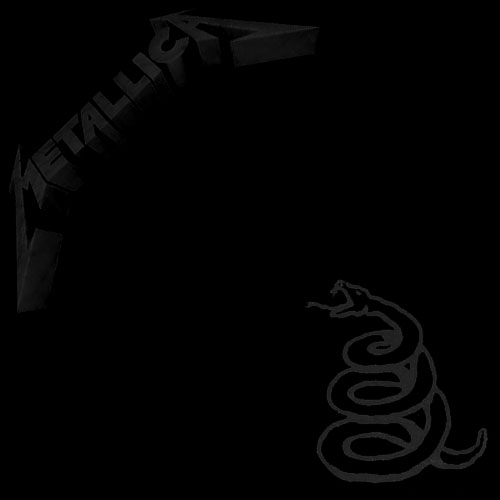
1991: Metallica – [self-titled]
(aka The Black Album)

Critics and fans unite may unite in the opinion that 1986’s Master of Puppets is the definitive Metallica album (and I don’t deny that it’s the more technically accomplished and defining), The Black Album remains my personal pick. Beneath it’s black-weathered cover, there’s evidence of the evolution of Metallica’s sound from their thrash era in the ’80s; in particular with the presence of slow-paced songs like ‘The Unforgiven’, and the haunting, ethereal ‘Nothing Else Matters’. Metallica still feels like the uncontrolled, charging beast it once was (nowhere is this more plain than on monsters like ‘Sad but True’), but now a band that has learned to pace itself every so often. It’s also reassuring that Metallica still know how to write a killer opener in ‘Enter Sandman’ (still the most accessible song for the masses, and kicking the record off spectacularly like ‘Blackened’ and ‘Battery’ did on …And Justice for All and Master of Puppets before it) and a snorting, raging closer in ‘The Struggle Within’. 1991 may be best remembered for the explosion of grunge, but for me, Metallica still take the crown.

Song Choice: [Enter Sandman]

1990: Pantera – Cowboys from Hell

Cowboys from Hell

Judging from my record collection, 1990 was a bleak year. Out of it all, Cowboys from Hell was pretty much the only release that fits the bill, but that shouldn’t really detract from the quality of the record. Bridging the gap between Pantera’s lesser-known glam-rock phase and the full-on thrash/groove-metal destruction which commenced with Vulgar Display of Power, from the get-go (the iconic ‘Cowboys from Hell’) there’s a sense of the brutality that would come to define Pantera’s later career in ‘Primal Concrete Sledge’ and much of the middle-ground of the record. It also remained a stark reminder of how spectacular Pantera could be in their prime, and how the combination of Phil Anselmo’s harsh vocals, Dimebag Darrell’s superlative guitars, Vinnie Paul’s solid percussion and Rex Brown’s grooving basslines can combine in perfect harmony. Defiantly my favourite Pantera record, it’s a sonic barrage of skilled musicianship summed up by Cowboys‘ closing song: ‘The Art of Shredding’; and what an art it is. Long may it reign.

Song Choice: [Cowboys from Hell]

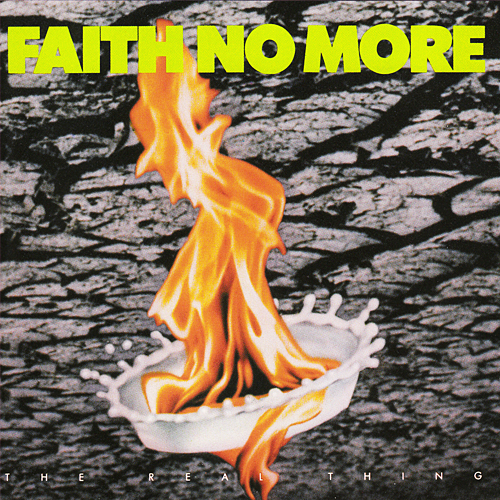
1989: Faith No More – The Real Thing

1989

On every audible level, The Real Thing is an absolute triumph. Faith No More showed superb promise on their previous album Introduce Yourself, but it’s the addition of Mike Patton (replacing previous vocalist, Chuck Mosley) that is the real turning point in the band’s trajectory: Patton brings both vocal skill and unbridled energy to the combo; rousing genuine excitement from the listener with his unique, avant-garde style and diverse range. Sure, Patton’s arrival brings the band into their own, but it’s nothing without the consistent spine of FNM and solid backing delivered by Mike Bordin et al., streamrolling through the likes  ‘From Out of Nowhere’, ‘Epic’ and onwards. Never a band to be pigeonholed, FNM’s grungey-metal is supplemented by a diverse range of funk, jazz, prog rock, hip hop and soul;  and finishing with the sublime cover of Black Sabbath’s seminal ‘War Pigs’.  with such a range of influences and new things to hear with each subsequent listen, The Real Thing is the gift that keeps on giving.

Song Choice: [Epic]

1988: Iron Maiden – Seventh Son of a Seventh Son

Iron Maiden - Seventh Son of a Seventh Son

This was a tough year to call; one of the first in this chronology that had no clear victor. In the end, Maiden’s conceptual opus just sneaked past the post over Metallica’s (undoubtedly great) …And Justice for All. Introducing more of the prog-rock and keyboard elements which had developed on Somewhere in Time two years prior, Seventh Son… represents a full-blown Maiden concept album, full of nods to mystical powers, the paranormal and subject matter which matches the musical ambiance. There’s certainly no lack of Maiden’s usual galloping flavour of NWOBHM but this time comes bundled with a more introspective and story-driven tack, most prevalent on the album’s singles ‘The Evil that Men Do’, ‘The Clairvoyant’ and the seminal ‘Can I Play with Madness’. Sadly, the album also represents an end to Maiden’s killer run of records, since the formula couldn’t be recreated on the subsequent No Prayer for the Dying, but if ever there was need to remind oneself of how persuasive and poetic Maiden can be when they’re in the zone, this is it.

Song Choice: [Can I Play with Madness?]

1987: Guns ‘N Roses – Appetite for Destruction

1987

‘Sweet Child O’ Mine’ may be the seminal song from the album, but Appetite for Destruction is major accurately summed up by opener ‘Welcome to the Jungle’: unhinged, bombastic and rock ‘n’ roll as hell, G ‘n R leap out of the box with a pocket full of arrogance and a sneer at the establishment, but possess skills enough to back up their anarchy. There’s a staggering number of classics on here: in addition to the two previously mentioned, it’s difficult to name a song that isn’t a surefire hit: ‘Paradise City’, ‘Mr. Brownstone’, ‘My Michelle’ are but a few. It’s a cohesive effort: an example of how, when working together, Axl, Slash, Duff, Izzy and Adler could produce something truly special and where ego doesn’t dominate. G ‘n R may have lost the plot going into the Nineties, but they’re far better when ignoring the nine-minute epics and the haunting strings and remain focussed on playing straight-up rock and roll. An undoubted classic, it’s also a benchmark for every rock band that has come since, and with good reason. A triumph.
Song Choice: [Welcome to the Jungle]
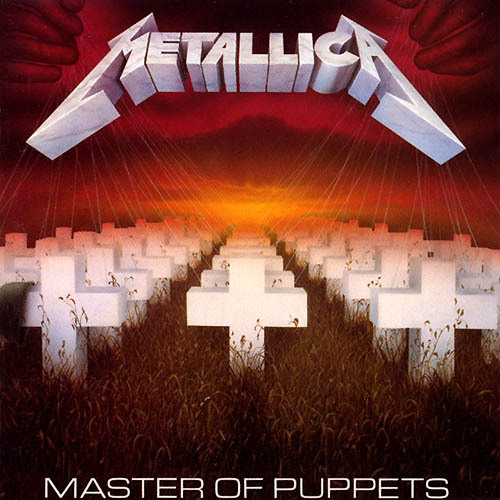
1986: Metallica – Master of Puppets

1986

What can be said about Master of Puppets that hasn’t been said already? The ultimate metal album, almost flawless in every regard, this is the sort of occasion when the stars align and eight songs are crafted with such beauty and brutality that the like of which will likely never happen again. There’s not a dud song on here; in fact, quite the opposite. ‘Battery’ still has (probably) the most killer intro of any metal song ever; ‘Master of Puppets’ still the rampaging, furious steamroller it ever was. The album’s crowning glory, however, is ‘Orion’: an eight-and-a-half minute instrumental epic that ebbs and flows and rages and quietens in an almost dream-like fashion. It’s a huge shame that this would be Metallica’s final album with bassist Cliff Burton, as one can only imagine where the Bay Area titans would have gone had his untimely death not occurred, but instead we got Jason Newsted and …And Justice For All a mere two years later; a clear reaction to Cliff’s passing. Puppets remains Metallica’s masterwork, though, and inspiration for every metal band existing today. An absolute powerhouse.

Song Choice: [Battery]

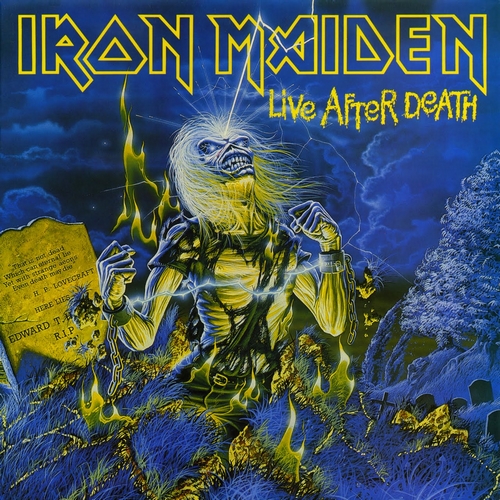
1985: Iron Maiden – Live After Death

Live After Death

I debated for a long time about whether I wanted to include a live album on this list. A long time. But heck, I figure that if you’re going to bend the rules, you may as well bend them for (arguably) the greatest live album of all time. Live After Death is a double-album of Maiden hits culled from the ‘World Slavery’ tour in support of Powerslave and featuring live versions of Maiden classics across ‘2 Minutes to Midnight’ through ‘The Number of the Beast’ across to the classic show-closer, ‘Running Free’ – as such, it effectively summarises the band’s first five years of recorded history; a live ‘best of’ compilation of some of Maiden’s best work; delivered at the height of their mid-80’s power. A finer live metal band you will never find, and Bruce Dickinson’s glorious crowd-pleasing and teasing still inspire goosbumps nearly thirty years on.

Song Choice: [2 Minutes to Midnight]

[Zinar7]

Tagged , , , , , , ,